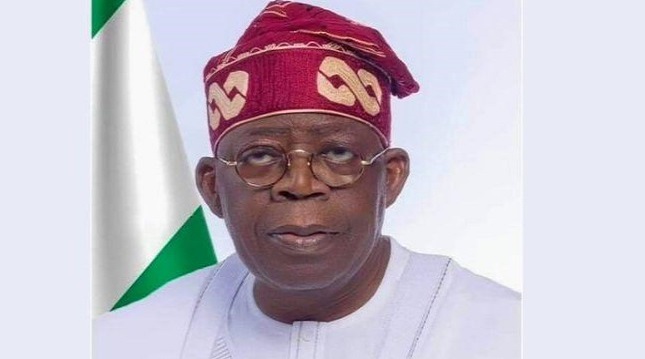
Akinwale Goodluck, corporate services executive at MTN Nigeria has oversight for Regulatory/Government Relations, Commercial/Legal, Company Secretariat, Corporate Communications and the Corporate Social Responsibility function.
He is an acknowledged resource on issues pertaining to the legal and regulatory framework of the oil and gas, telecommunications and banking & financial services sectors.
Since joining MTN in December 2001 as commercial legal advisor, Goodluck has held positions of increasing responsibilities culminating in his latest appointment.
Goodluck had worked at Nigeria’s pioneer investment bank, NAL Merchant Bank where he acquired considerable expertise in legal advisory services, corporate finance and financial services.
Thereafter, he joined the services of The Law Union, a firm of barristers and solicitors, with primary responsibility for the Corporate and Commercial Law Group of the firm.
He spoke to Miebi Senge
Intractable Problem of Quality of Service
I think the issues around quality of service border around two things: one, there isn’t enough capacity; and secondly the availability of that capacity.
So two things, capacity and continued availability of that capacity. The issue of capacity essentially lies in the hands of the operators. It is for us as operators to get a good understanding of the demand and put in the capacity to meet that demand.
The good news is that operators have the resources to install the required capacity but the reality is that it is extremely difficult to put infrastructure in the ground in our environment.
The same sort of infrastructure challenges that have bedeviled the power industry also affect the telecommunications industry. Telecoms infrastructure cannot exist in vacuum and there has to be parallel growth in other sectors for the full realization of the benefit of increased rollout.
Beyond that, when we are even able to put the infrastructure in the ground, the challenge then becomes making it available to carry traffic.
The litmus test is then to ask if that additional capacity is available to relieve the congestion in the network.
We are finding ourselves in a situation where operators are building base stations, integrating them into our networks, but because of circumstances beyond our control, that infrastructure is not carrying traffic.
And if that infrastructure is not carrying traffic, it is not relieving congestion. Then we begin to see the challenges in terms of quality of service. Definitely, customers’ experience will be very sub-optimal.
Why are They not Carrying Traffic?
When you are building a network, you need to make that network available to carry traffic. It needs to be integrated; it needs to be carrying traffic, and subsequently relieving congestion.
We find ourselves in a situation where, because of a lot of extraneous circumstances, a lot of infrastructure are not carrying traffic for no fault of the operators’. If you look at the North-East, we have about 200 base stations that are not available to carry traffic today because of the problem of insurgency, and the attacks on our base stations.
We also have a lot of base stations that are sealed up by different agencies of government. Again, this is contributing to lack of capacity.
Then, you have the day-to-day problems like community lock outs, area boys’ agitations, etc. All those things are also negatively impacting networks.
I would say in a nutshell, those are the two major factors impacting quality of service, and we need all stakeholders to resolve those issues.
Major Challenges to Quality of Service
It’s a challenging environment, but I dare say that to whom much is given, much is expected. As the biggest operator in Nigeria today, in fact, the biggest operator in Africa today in terms of subscriber number, there are a lot of expectations from our subscribers, our regulator, legislators, our friends in the media and other stakeholders about the quality of service.
Nigerians are tired of excuses, and they want good quality. Aside from the things I spoke about earlier on, we’ve seen in this market in the last 18 months, a significant reduction in tariffs. This coupled with all sorts of promotions, has led to a greater demand for our services. So we have seen minutes of use go up as a result of tariffs coming down.
People are talking a lot more and it means that we require a lot more capacity to deal with that. I think that perhaps some of the competition has been a little exuberant and there is need for the industry to self-regulate and ensure that as the industry chases subscriber number, we do not mortgage quality. So we find that the way prices have come down in the last 18 months has also led to greater demand and as such we are having to play catch-up all the time.
There is work for everybody, including the regulator to ensure that the business environment or the competitive environment is a lot saner so that we can preserve the long term sustainability of our industry.
MTN and Local Content Initiative
The reality is that nobody can operate in an environment without using local resources. For us as a business, we have also gone beyond patronising people just for the sake of patronising them. We believe that there is significant value-add by using local contractors.
They are very competent and able Nigerians. We have worked with a few partners, and as our business has grown, their own businesses have grown tremendously. We see them in different areas of our business- in the areas of network build, information systems, marketing, sales and distribution. We are working with Nigerian partners
Recently, there has been a lot of clamour for more Nigerian participation and local content. I can share with you that while a lot of our competitors have handed over their entire network build to foreign OEMs, (we have also handed over a considerable part to the OEMs, which in this market are typically the Ericssons, Huaweis and ZTE).
What is the Status of WACS Now?
WACS is live and carrying traffic for MTN and a lot of other operators. A lot of people have both live and redundant capacity on WACS. WACS has delivered on expectations.
The Bandwidth pipe coming into Nigeria has increased.
Internet Experience
Your bottleneck is not at the WACS end. Your bottleneck is between where WACS terminates on the beach and where you are using Internet service.
If we had a situation where all my backhaul was done by fibre and all the base stations were connected by fibre, and then connected to the base station controllers (BSC) by fibre and then to the switch by fibre, the speed would be awesome.
Although we are able to land the speed at the beach, to distribute it inland as effectively as we would like remains a challenge.
What Would you be Saying to the NCC and other Stakeholders?
For us to achieve what we are all trying to in the area of broadband, we need a lot of fibre in the ground. We need a concerted effort; NCC to support the operator, to support the private sector to roll out this fibre. We need the involvement of the state and local government.
We need to take away the hand-cuffs and chains impeding roll out of fibre, such as prohibitive right-of-way costs, etc. We need the cost for right-of-way in Lagos or in Kano or any other city in Nigeria not to be more expensive than the cost for the right of way in New York. We need to have affordable fibre in the ground. That will translate to affordable bandwidth and a much better experience.
Nigerians Enjoying Latest Technology in the Mobile World
In our industry, yes. In fact, we are probably always at the cutting edge. Because of our volumes here, and the large appetite demonstrated by operators in Nigeria, we are typically being offered best-in-`class technology and we are always given top priority in terms of queuing for the latest equipment.
What we need to put on top of that is to ensure that we have an environment that can receive the infrastructure, so that we can see the benefit of the latest technology that the operators in Nigeria are deploying.
MTN’s Success in Nigeria’s Challenging Business Environment
I wish I could tell you everything we are doing, but I would be helping the competition. I think the bottom-line is that we took a decision to invest and reinvest, and we haven’t stopped investing. When a lot of people were scared and sceptical about Nigeria, we took the bull by the horns.
When some of our competitors were changing ownership regularly, we stayed the course. We are seeing the benefits of the investments that we have made.
Today, we have the biggest subscribers, serving in excess of 45 million Nigerians. With that amount of scale, your business will be big.
We are also a very frugal and prudent organisation. In the first five years of MTN Nigeria, we took a decision not to externalise any dividend. So no shareholder got any dividend for five years.
Instead, we put all the money back into the system and they are now beginning to reap the fruit of their labour.
Blame Boko Haram, Others for Poor QoS – Goodluck
cwadmin25 Mar 20130 Comments
Akinwale Goodluck, corporate services executive at MTN Nigeria has oversight for Regulatory/Government Relations, Commercial/Legal, Company Secretariat, Corporate Communications and the…
c
Published by
cwadmin
Trained and practicing journalist passionate about telecommunications, fintech, cybersecurity, and digital economy reporting.
You May Like
U. S. Mission Nigeria Celebrates Azih, Nigerian for Fintech Innovation
Autobrake Failure Contributed to Enugu Air’s Benin Runway Overrun - NSIB

NLNG, NCDMB Boost Engineering Research with Innovation Centre
NITDA Seals Strategic Deals with Goose FL and Fireflies AI to Power $1 Trillion Digital Economy Vision
Anambra Seeks Digital Inclusion in Rural Communities