This year may well be remembered as the year when the world finally tamed one of the greatest killers in human history: Plasmodium, the mosquito-borne parasite that causes malaria.
The good news is that the world is getting closer than ever to a malaria vaccine that actually works.
And it’s made of the malaria parasite itself, just engineered without three key genes that help it invade the liver.
The first human trials, published this week in the journal Science Translational Medicine, found the vaccine is safe, doesn’t cause too many side effects, and stimulates the body’s immune response to malaria.
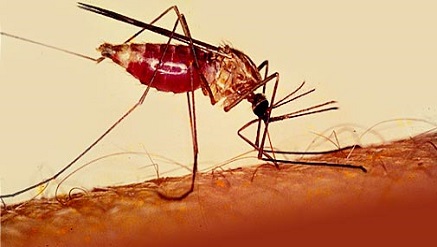
The coolest part? The researchers gave the dummy parasite to patients the same way they’d get the real one: not in a syringe, but through the bite of an infected mosquito.
The next steps are to test it on more people and determine how vaccinated patients fare when exposed to the disease.
If the results are good, a vaccine will fight malaria in a way no insecticide, protective gear or bed netting could.
Dr Sebastian Mikolajczak, one of the researchers, said: “The clinical study now shows that the vaccine is completely attenuated in humans and also shows that even after only a single administration, it elicits a robust immune response against the malaria parasite.
“Together these findings are critical milestones for malaria vaccine development.”
There are two similar approaches to “attenuating” the malaria parasite – one involves weakening it by exposing it to radiation and the other gives the patient anti-malarial drugs at the same time as infecting them.
But the most advanced malaria vaccine is years ahead. RTS,S uses some components from the parasite to generate an immune response and the vaccine is now going through large field trials.
However, an approach that uses the whole parasite may ultimately prove more effective.
Sir Brian Greenwood, from the London School of Hygiene and Tropical Medicine, said: “It is encouraging, but this is a first step toward developing a vaccine.
“It is really promising and the evidence presented here is enough for challenge studies [in which people are immunised and then infected with malaria to see if it works].”
However, he cautioned that the latest approach is “not practical in the field” as it requires nearly 200 bites by infected mosquitoes.
Ultimately it would have to be just an injection.
Dr Robert Seder, from the Vaccine Research Centre at the National Institutes of Health, said: “This report is a major advance in malaria vaccine development by providing the first evidence that genetically attenuated Plasmodium falciparum parasites are safe and immunogenic in humans.
“Future studies demonstrating protective efficacy will be the next critical milestone for continued development of this promising vaccine approach”.
Celebrations as Science Records Major Victory against Malaria
Comms Week6 Jan 20170 Comments
This year may well be remembered as the year when the world finally tamed one of the greatest killers in human history: Plasmodium, the mosquito-borne parasite that causes malaria. The good news is…
C
Published by
Comms Week
Trained and practicing journalist passionate about telecommunications, fintech, cybersecurity, and digital economy reporting.
You May Like

Releasing President Tinubu’s Records Can Endanger Lives – FBI

Tinubu Orders Arrest of Nwabueze, Head of Another Fake Agency, Suspension of 3 Perm Secs

How AI, Poor Governance Aid Transnational Scams —UNODC

Access to Equipment, Specialists Key to Survival of Preterm Babies — Haven Pediatric CMD

Shell Reinforces Safety Commitment @ CEO Contractors Forum