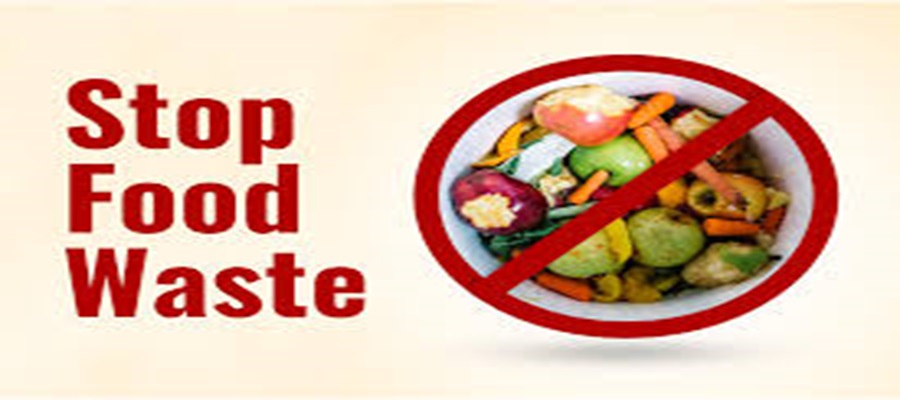
Federal government, The European Union (EU), and the United Nations Industrial Development Organisation (UNIDO) have called for urgent and coordinated action to curb food waste and promote sustainable consumption and production practices.
They warned that when food is wasted, the water, energy, and labour invested in its production are also lost, accelerating climate change and undermining global efforts to build a zero-waste, circular economy.
Speaking in Abuja at the commemoration of this year’s International Zero Waste Day, themed “Food Waste Reduction: Minimisation and Valorisation,” Zissimos Vergos, deputy Ambassador of the EU Delegation to Nigeria and ECOWAS, disclosed that Nigeria wastes approximately 38 million tonnes of food annually, more than any other country in Africa.
He further noted that globally, in 2022 alone, nearly one billion tonnes of food—almost one-fifth of all food available to consumers—was wasted.
“This is not just a loss of food; it is a squandering of precious resources, a missed opportunity to combat hunger, and a direct threat to our planet’s health,” he said.
Vergos stressed that food loss and waste are major drivers of environmental degradation, contributing up to 10 per cent of global greenhouse gas emissions—nearly five times the emissions of the entire aviation sector—and accounting for as much as 40 per cent of global methane emissions.
Highlighting Nigeria’s ongoing efforts, he said: “The Nigeria Circular Economy Roadmap, the establishment of the Interministerial Circular Economy Committee, the push to develop a National Plastic Waste Management Regulation, these are not small gestures. These are structural shifts.
“They signal that Nigeria is not waiting for someone else to solve its problem; it is building the system to solve it from within. Now, today’s theme: food waste reduction, minimisation and valorisation, is the right conversation at the right moment.”
Vergos also shared three key lessons from the EU’s experience to support Nigeria’s efforts. First, he urged investment in rural infrastructure, including roads, storage, and cold chains, to address post-harvest losses beyond the farm gate. Second, he emphasised the need to promote agro-processing by converting fresh produce into value-added products such as tomato paste and cassava flour, while linking smallholder farmers to processors and markets.
Third, he called for embedding zero-waste principles, recycling, and resource efficiency into school curricula from the primary level to foster a culture of sustainability among future generations.
Reaffirming the EU’s commitment, he stated, “The EU stands ready to be your partner in that work, through funding, through technical cooperation, and through genuine solidarity.”
In his keynote address, Balarabe Abbas Lawal, minister of Environment, reiterated the Federal Government’s commitment to environmental protection and sustainable practices aimed at safeguarding the health and well-being of Nigerians.
“Food waste remains a significant challenge that affects not only our environment but also our economy and society. Every discarded meal represents wasted resources such as water, energy, labour, and capital, while Nigerians continue to face food insecurity.
Addressing food waste is therefore central to sustainable development and ensuring a healthier future for all,” he said.
He added: “The Federal Ministry of Environment, in this year’s national appropriation, has developed projects on food waste elimination in major markets around Nigeria. And this is to show you that the Federal Ministry of Environment is tackling the issues of food waste at its core, especially post-harvest losses.”
Stressing the broader impact, he noted that addressing food waste aligns with the Ministry’s core objectives. “Reducing food waste will not only help to lower pollution and greenhouse gases, but also conserve valuable resources and promote more efficient and responsible consumption patterns across households, businesses, and institutions,” he added.
Also speaking, Amb. Philbert Johnson, Director and Representative of UNIDO’s Sub-Regional Office in Nigeria, emphasised that food must not be wasted, especially in a country grappling with food insecurity and malnutrition.
“Food is far more than a commodity: it is a foundation of wealth, a driver of health, and a pillar of security. It sustains our homes, supports industries, and underpins the stability of our societies.
“When food systems function efficiently, they generate income, enhance resilience, and improve well-being. When food systems fail, when food is lost or wasted, the consequences ripple across our economies, our environment, and our communities.”
He reaffirmed UNIDO’s commitment to supporting Nigeria in building resilient, inclusive, and sustainable agro-industrial systems.