Precisely Friday, August, 29th Globacom will be celebrating five years of its operation as a telecommunications company in the country.
Globacom, Nigeria’s Second National Operator launched its operations on August 29, 2003 two years after digital mobile telecommunication (GSM) was introduced into the country. However, with its entry into the Nigerian market with the elusion Pay by the Second Billing platform, the company has continued to dedicate the pace both in terms of services delivery, extent of coverage and innovations. It was founded, and indeed operates with the passion to re-ignite the African spirit. The network has proved, in just five years of operation, that the African can match the best anywhere in the world. Globacom is building a network that reflects the resilience, the energy, excellence and true nature of Africans; one that will make Nigerians proud and ultimately become the pride of the continent. Founded on a vision of being the largest and most successful had acquired over 17 million subscribers with coverage extending to over 50,000 cities, towns, and communities. These are records still unbroken in the history of telecommunication in Africa. It is perhaps its impact on people that resonates through out the industry. Globacom immediately forced down the cost of telephone services with the crashing of GSM tariffs and SIM costs making telephony more accessible. Nigerians have not yet forgotten how Glo gave them the golden opportunity to be charged either by the minute or by the second. Indeed, that over 30 million Nigerian students, artisans, and countryside dwellers can today use the telephone is hugely attributable to the Globacom revolution. Through its value added services, the company has brought to Africa more benefits of modern technological innovations. The handset has become a tool for empowerment, entertainment and connectivity to the worldwide web.
How fast time runs. How splendid, Globacom, the idea Otunba Mike Adenuga saw five years ago has helped Nigerian telecommunications operations in no little ways. He deserves kudos because if he were a politician, he may had ferried the idea to another country, just the same way we have read corrupt government officials fiery our money, their loot, into foreign countries, thereby resulting to the impoverishment of the citizenry.
It is believed that one thing that has brought smiles to the management of Globacom and its subscribers is the achievement that Globacom has made within five years in the telecommunications operations.
Like many entrepreneurial industries that suffer lose, Globacom has not entertained fear of such since its emergence in August 29, 2003. Rather, it is of the view of new things to be achieved, being optimistic that what it has achieved so far is the beginning of success, thereby emboldening the stoic spirit of its subscribers on high-ranked service.
In this regard as well as to prove that it is thoroughly an African network of choice that the company has started extending its operations to neighbouring African countries in line with its philosophy of bringing joy of communications required for them to rule their world as well as empower them with the tool of communications.
To this end, it has launched Global System for Mobile communications service in Republic of Benin and has won operating license in Ghana.
This feat has positioned Globacom as Africa network operator and not only Nigeria operator.
On the gateway business, Globacom declared that it is one of the largest carriers of voice traffic in Africa carrying over 3 billion international minutes annually. At the local scene, Glo is the gateway for most network operators in Nigeria and the surrounding African countries and has built strategic partnerships with 43 Tier One Carriers (35 TDM and 8 VoIP) with a total of 618 E1s. Telcos like AT&T, BT, France Telecom, Sprint use Glo to connect to their customers in Africa.
Just last week, Globacom said its 9,200 km international submarine cable, Glo 1, being configured from Portugal to Lagos, will berth in Lagos early next year.
Globacom said in a statement that the submarine cable would enhance quality of its services. It added that the cable, which had so far covered 4,500 km to Lagos, would pass through 15 countries.
According to Globacom, the submarine cable would enable Glo to provide quality service through multiple redundant and high quality direct links to various countries across the world. It would enable it to interconnect with many international networks and leading traffic carriers in the West African region.
According to the company, more countries have indicated interest in getting connected to Glo through the international submarine cable, and had already started exchanging communication with some of these countries on how they could latch on to the facility as soon as possible.
The company said that Glo 1, the first submarine cable in the world to be individually financed, was being built by Alcatel, a provider of cable.
Glo's international roaming services involve 193 networks in 98 countries and provide services on voice, Short Message Service (SMS), General Package Radio Service (GPRS) roaming and BlackBerry services. It also provides bulk sale of bandwidth and offers access to 804 networks in 174 countries via International SMS.
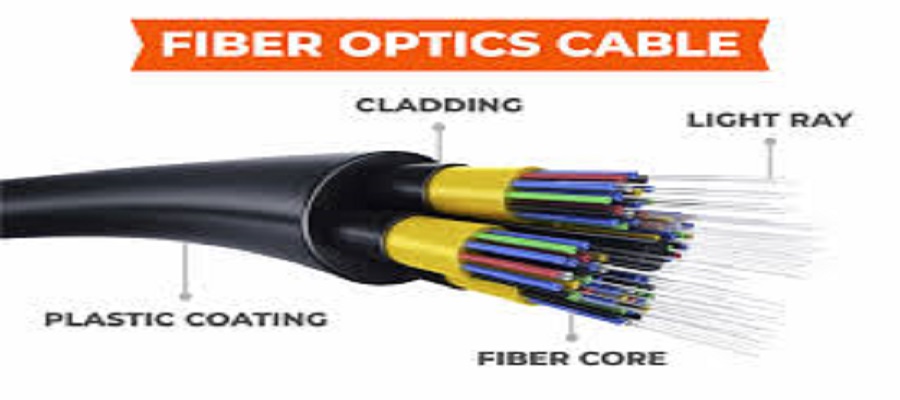
With the success story of Globacom, within this short period, it has grown from an ordinary GSM company, to a giant company that its biography cannot contain in a 1000 page book. With total solution, Globacom is on the ebullient side to still empower its over 17 million subscribers as it rolls out its fixed services commercially in Abuja and Lagos. This would follow the completion of the fibre optic laying in most parts of the country.
Globacom has been ahead of completion in spite of the fact that it started behind its competitors, having acquired the Third Generation project license, otherwise called 3G, which is the advanced technology of the 2.5G technology; which is currently used by telecommunications operators in Nigeria. The company was among the first operators that demonstrated the technology explaining the capacity of its network to deliver 3G services to its teeming subscribers.
The duty of the 3G is to promote telecommunications service with capability for seamless transmission. It will as well receive high quality sound, data and picture messages by fixed and fast-moving subscribers.
Globacom's growth in Nigeria has been phenomenal. Starting two years behind other operators in Nigeria, the network has become the fastest growing in Africa and the Middle East region and is the third fastest growing network in the world. In 2006, alone, Globacom added six million subscribers to its network.
Aside building a strong telecommunications network in Africa and Nigeria, Globacom has also exhibited that affinity with the society is the company’s second nature. It lives and breathes the people.
Although, it made business sense to launch into the market, never in the history of Nigeria has any organization displayed such deep sense of responsibility and commitment to the development of the Nigeria state. From its corporate persona through its business decisions to the huge deployment of resources; to the unbroken support for Nigeria and Nigeria’s interests, Globacom has come to represent the can-do Nigerian/African spirit.
Globacom as the foremost network in Nigeria adopted a strategic focus on people-resonant initiatives in education, health and the development of the Nigeria community. The network’s sponsorship of sports is predicated on the role of sports as a national unifier. With soccer, in particular, all the ugly characteristics of tribe favouritism and nepotism give way to unity and comradeship.
To support this national icon, Globacom has to date committed over N10 billion on football and other sports. For two consecutive years Nigerian league had no sponsors and the Nigerian Football Association, now Nigerian Football Federation was finding it difficult to organize the competition. It was in this state that Globacom gave the league the life line it required for survival. Glo signed a four year deal with the Nigerian Football league worth about N4 billion for the sponsorship of the Globacom Premier League.
Globacom recognizes that in a match, victory is not only won by the strength of the players but also by the cheers of their supporters. And to enhance the performance of Nigerian teams, the company has taken over the sponsorship of the Nigerian Supporters Club.
There has also been a major partnership between Globacom and Niger Delta Development Commission (NDDC), towards eradication of poverty in the region. The programme, tagged Self Employment Business Support provides employment opportunities for youths in the region. The initiative is to empower Nigerians and help them become self reliant. This effort is complemented with another partnership with Shell Petroleum Development Corporation (SPDC), to assist unemployed youths of the oil producing but impoverished Niger Delta region set up their own business.
Indeed, Globacom has with five years of operations achieved a lot in both its core business of building telecommunications capacity as well corporate social responsibility. As the telecommunications giant in Africa is trying to stamp its feet in world’s telecommunications landscape, Nigerians are wishing the company well and encouraging it not to relent in this effort.