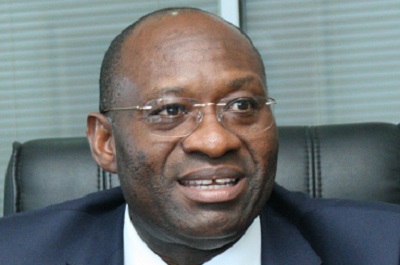
Ifie Sekibo, managing director/chief executive officer of Heritage Bank, has said that concerted promotion and protection of Small and Medium Enterprises (SMEs) through the establishment of a solid framework supported by clearly articulated government policy is the first step in creating an active SME sector that could spearhead the much needed revolution Nigeria and indeed Africa urgently requires in the area of building the Next Generation of African Corporates.
He sated this at the 2nd US-Africa Trade & Investment Forum/Africa Investment & Development Awards which took place at St. Regis Hotel, New York, USA where he was selected to speak as an authority on "Small & Medium Enterprise Funding in Africa - a banker's experience", on account of what the organizers described as the outstanding efforts of the new Heritage Bank in the area of SME Banking in Nigeria.
Sekibo observed that in Sub-Saharan Africa, SMEs are more credit-constrained and this typically affects growth possibilities as significantly low number of start-ups who apply for financing actually succeed.
Studies, he noted, indicate that more than 70% of the SMEs lack access to medium-longer-term finance, creating an SME funding gap of more than $140 billion in Africa alone.
“Using Nigeria as a case study, between 2003 and 2009, SME loans as a percentage of total credit, decreased from 7.45% to 0.18%. Yet by 2012, Nigeria had about 17.6 million MSMEs employing about 32.4 million people. Although it is generally accepted that SMEs enhance competition and entrepreneurship, and their development has a positive impact on innovation and productivity growth, policy and infrastructure factors to mitigate risk and costs that SME sector cannot internalise needs to be seriously worked upon by all relevant stakeholders”
He further revealed that in Nigeria, most SMEs die within the first five years of existence while another smaller percentage goes into extinction between the sixth and tenth year, with only five to ten percent surviving, thriving and growing into established corporate status.
He listed the leading cause of such sub-optimal output to include: Poor access to funds, Weak institutional support, unstable macroeconomics, complicated and unstructured legal framework/regulation, inadequate business information, infrastructure and business environment as well as Human capital factors among others.
Sekibo particularly lauded recent response to financing SMEs in Africa by Development finance institutions that are engaging partnerships with commercial banks and other SME focused lenders to initiate advisory and innovation interventions to promote diverse SME funding windows.
He listed these as including the African Development Bank (AfDB), Ecowas Bank for Investment and Development (EBID) and the relatively new African Guarantee Fund which was officially launched in June 2012 as a focused intervention fund to enhance international funding access to lending institutions with strategic and demonstrable focus on the SME space, among others.
“5 out of the top 10 fastest growing economies in the world are in Africa. The 39 fastest growing economies in 2013 have an average size of $78 billion. Growth in these countries is largely driven by SGBs – Small Growing Businesses such as Agriculture, Solid Mineral, and Retail Distribution. Small is no longer risky, it is the way to building the Next Generation of African Corporates”, he concluded.
Heritage Bank MD Advocates Strategy for Next Gen of African Corporates
cwadmin3 Oct 20130 Comments
Ifie Sekibo, managing director/chief executive officer of Heritage Bank, has said that concerted promotion and protection of Small and Medium Enterprises (SMEs) through the establishment of a solid…
c
Published by
cwadmin
Trained and practicing journalist passionate about telecommunications, fintech, cybersecurity, and digital economy reporting.
You May Like

Moniepoint Says Unexpected Expenses Disrupt 73% of Nigerians’ Savings Plans

NAICOM Revokes Universal Insurance Licence, Appoints Receiver

EFCC Arraigns FCMB Staff, Accomplice over Alleged $25,000 Access Credential Deal
Agusto & Co Withdraws A-credit Rating on Geregu Power Over Bond Default

Banks, Others Report 42,082 Transactions to NFIU