Connect with us

General News

HiLife Fest 2018: Championing & sustaining Igbo highlife music culture among Millennials

Published

on

Kindly share this post

The commercial hub of the South East, Onitsha got a taste of the HiLife Fest, themed ‘The Complete Experience, on Sunday, 15th of April.


The festival, which is a highlife music competition celebrating the cultural rituals and values of Igbos through Music witnessed a host of talented upcoming artistes slug it out for a position in the quarterfinals.


The music fest, an initiative of Life Continental Lager Beer, featured stunning music performance from Obiligbo Brothers, Tipsy Kelvano, 2017 Hilife Fest King Chibest and Flavour the king of Afro hip pop himself.


The winners from this region were Don Ifeanyi Frank and Destiny Onochukwu while Ofuobi cultural group came tops and qualified to be in the quarterfinals in the cultural dance category.


The decision was not an easy one, as all contestants impressed the panel of Judges, which included David Jones, Jude Aguize, Dr Nicholas Akas, guest judge -Michael Ndubuisi and Highlife Veteran, Bright Chimezie.


The winners from Onitsha will now join Chukwudi Agbom, Emma Agbom and PC Nwabuzo dance group, who are winners from Asaba, Kalapi Ojuka, Kelvin Emmanuel and Kanayo dance group, winners from Port-harcourt alongside Obiora Ikechukwu, Onuoha Philip and Master Stars who emerged winners from the regional finals in Aba, as the Hi-Life Fest train moves on to Owerri, Nsukka & Abakaliki.


Speaking after the event, Mr Emmanuel Agu, Portfolio Manager–Mainstream Lager and Stout Brands, Nigerian Breweries, said, “Hilife fest is our way of paying homage to the cultural heritage of the Igbo people through highlife music.


On why this year’s edition was themed ‘The Complete Experience’, he informed us on how the platform was made bigger and more complete by the inclusion of cultural dancers.


“We understand the relevance of these classic tunes to the people here and we delight in bringing a full package music festival to our esteemed consumers.” he added.


Destiny Onochukwu one of the quarter finalists from the singing category in Onitsha out of excitement expressed himself saying, “I really cannot believe that I’m one of the winners from regional finals.


“I can testify to the fact that the competition was tight and the judges must have had a difficult task selecting me as one of the winners, but I thank God for making it possible. Now it is time to focus on the quarterfinals”.


Also, Chief Bright Chimezie, the Zigima king, expressed satisfaction on display of talent saying, “I am not so surprised by the level of talents that we’ve seen in the cities covered so far, especially Onitsha being the home of Osita Osadebe, Oliver De Coque and many other highlife music icons.


“It shows highlife music culture is very much alive and is in safe hands”.


With 4 successful selection parties already, fans in Owerri can expect to have the time of their life when Life Continental Beer brings the Hilife fest to town.


Hi-life Fest remains the only concert dedicated to celebrating the rich cultural heritage of the Igbo people through music.


Fans in Owerri should expect nothing less than electrifying performances and the best of highlife music when Life beer brings the Hi-life fest to Bongo Center, Owerri.


HiLife fest is an initiative of Life Continental Lager Beer, the fine quality lager beer from the stables of Nigerian Breweries Plc., made from the choicest grains, hob extracts and the purest of waters.


Life is expertly brewed to give that rich, crisp distinctive taste and well-rounded aroma in true quality fashion of the master brewer.

Kindly share this post

Ugo Onwuaso is an ICT enthusiast. He believes technology should be used for general good. He holds a Master of Public Administration (MPA) degree from the Lagos state University. Dear Reader, Your support matters. But we believe that technology makes life more exciting and helps improve the lives of people around Nigeria and indeed the world. That is why, we have devoted our energy to independent reportage of technology and finance and how they affect lives. Our incisive and analytical view of how technology news affects the daily life help individuals and organizations make up their minds. Quality journalism costs money. Today, we're asking that you support us to do more. Kindly support our effort to deliver technology and finance journalism to everyone in the world. Donate as little as N1,000. Bank transfers can be made to: UBA Plc 1017156876 Communication Week Media Ltd

General News

Woherem Proposes Pragmatic Roadmap to End Terrorism and Banditry in Nigeria

Published

on

Kindly share this post

Dr. Evans Woherem, an award-winning African technology researcher, analyst, and writer, has proposed a comprehensive and implementable strategy to end terrorism, banditry, and criminal violence in Nigeria, warning that the country’s prolonged insecurity has reached a critical point that demands urgent, coordinated action.

Titled “A Comprehensive Strategy for Ending Terrorism, Banditry, and Criminal Violence in Nigeria: A Pragmatic, Multi-Layered, and Implementable Framework,” the paper presents a holistic roadmap designed to reverse more than a decade of escalating violence that has claimed thousands of lives, displaced communities, weakened local economies, and eroded public trust in governance.

According to him, insecurity has become deeply entrenched in everyday life across the country. “Terrorism, banditry, and criminal violence have become so commonplace that they now dominate daily conversations among Nigerians,” Dr. Woherem noted, adding that while the crisis is most acute in the North-East, North-West, and North-Central regions, “its effects are now being felt even in the southern parts of the country.”

Citing the 2025 Global Terrorism Index, which ranks Nigeria sixth globally in terms of terrorism impact, Dr. Woherem described the ranking as “a sobering statistical confirmation that terrorism still weighs heavily on the Nigerian state.”

The paper traces the roots of the crisis to the emergence of Boko Haram in 2009 and the subsequent rise of splinter groups such as ISWAP. It recalls high-profile incidents including the 2014 abduction of schoolgirls in Chibok, the Dapchi and Kankara kidnappings, and a series of mass abductions and attacks on schools and places of worship recorded in 2025.

Dr. Woherem observed that banditry, largely driven by ransom payments, “has spread across the entire nation, creating fear, weakening productivity, and pushing millions of households deeper into poverty.”

While acknowledging the role of military action, the author cautioned against relying on force alone. “Nigeria cannot defeat insurgency and violent crime through arms and ammunition alone,” he said. “Any sustainable solution must confront the internal conditions that allow insecurity to thrive.”

Among the key drivers identified in the paper by Dr. Woherem, are porous borders, arms proliferation, youth unemployment, economic stagnation, and persistent conflicts over land and resources, challenges Dr. Woherem stressed can be addressed through “a deliberate, intelligence-led, and whole-of-society approach.”

At the heart of the proposed framework, Woherem noted, is a call for intelligence-driven security operations, including the establishment of a National Counter-Insurgency and Intelligence Fusion Centre. “Security operations must be guided by accurate, actionable intelligence rather than fear-led mass actions that often harm civilians and undermine public trust,” he stated.

The paper also advocates comprehensive policing reforms, including the creation of constitutionally backed state police systems supported by a more specialized federal police structure. “Nigeria’s over-centralised policing model is structurally incapable of effectively addressing widespread criminality across such a vast and diverse country.”

Recognising the realities at the grassroots, Woherem calls for the formal regulation of community-based security groups, and noted that “ignoring vigilante groups is dangerous, and banning them outright is unrealistic,” but stressed that their roles must be clearly defined, regulated, and subject to strict oversight.

On border security, particularly in the Lake Chad Basin, the author warned that instability in neighbouring countries continues to fuel Nigeria’s insecurity. “No permanent solution is possible without deep regional cooperation,” he said, advocating an Integrated Border Management system supported by joint operations with neighbouring states.

The paper places strong emphasis on prevention through economic inclusion, youth employment, and skills development. “Jobs and income remain the most powerful tools for preventing recruitment into violent groups,” Dr. Woherem asserted, adding that immediate livelihood opportunities significantly weaken the appeal of extremist narratives.

He also called for structured deradicalisation and reintegration programmes, noting that “a humane, community-accepted process is essential for breaking cycles of violence and preventing relapse into extremism.”

Dr. Woherem further emphasised the need for governance reforms and accountability in the security sector. “Without transparency, oversight, and institutional integrity, even the best security strategies will fail,” he warned.

The white paper outlines a phased implementation plan from 2025 to 2030, beginning with intelligence fusion, pilot state police initiatives, community security registration, drone surveillance, and financial crackdowns on terror networks, before expanding into nationwide reforms and long-term consolidation.

Concluding, Dr. Woherem expressed cautious optimism about Nigeria’s future. “Nigeria can overcome this prolonged phase of insecurity,” he said, “but only through political will, coordinated institutions, and the active participation of society.”

He added that the proposed framework offers “a realistic pathway to restoring security, rebuilding public trust, and unlocking Nigeria’s vast human and economic potential.”


Kindly share this post
Continue Reading

General News

REDAN Seals Landmark MoU, Validates Sytemap’s Real Estate Infrastructure

Published

on

Kindly share this post

In a market where less than 3% of land is formally registered and property fraud remains systemic, infrastructure, not apps, is becoming the defining battleground for real estate innovation.

REDAN Seals Landmark MoU, Validates Sytemap’s Real Estate Infrastructure

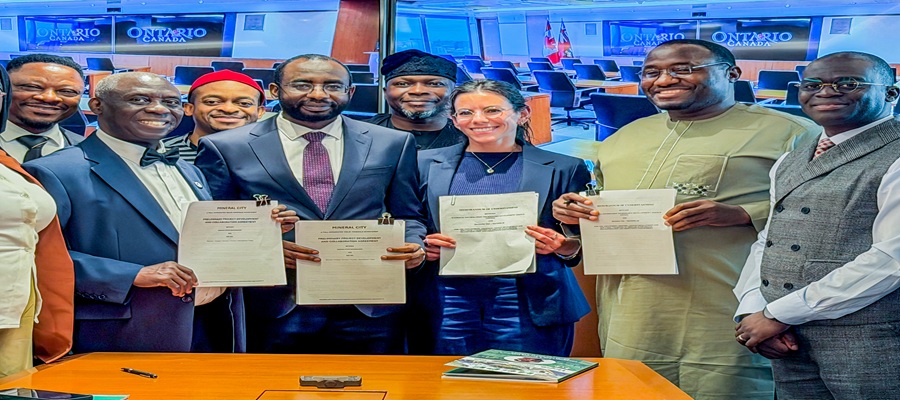
L-R: Ndifreke Ikokpu, COO, Sytemap, HRM Oba Akintoye Adeoye, President REDAN & Cholatte Odunlade-Akeji, Director, RightHome

That reality came into sharp focus on December 18, 2025, as the Real Estate Developers Association of Nigeria (REDAN) signed a Memorandum of Understanding (MoU) with Sytemap Technologies Limited, signaling a major industry endorsement of Sytemap’s land and real estate transaction infrastructure.

The partnership centers on RightHOME, a jointly developed digital real estate platform powered by Sytemap’s secure cloud infrastructure, mapping systems, transaction monitoring, and fraud-prevention architecture, with REDAN driving ecosystem adoption through its nationwide developer network.

Nigeria’s real estate sector processes transactions worth trillions of naira annually, yet remains heavily manual, fragmented, and vulnerable to disputes. Industry data suggests unresolved title issues alone lock up ₦36 trillion in dead capital, limiting access to finance and slowing development.

“This MoU represents a shift from fragmented digitization to coordinated infrastructure,” said Nnamdi Uba, CEO at Sytemap. “When the industry body itself aligns around shared standards, verification, and technology, innovation can finally scale responsibly.”

Under the agreement:

·       REDAN will onboard registered developers and promote adoption of the platform as a trusted digital channel.

·       Sytemap will deliver secure hosting, real-time monitoring, escrow-aligned transaction workflows, and compliance with Nigeria’s data protection regulations.

·       Joint standards will be developed for digital verification, transparency, and asset mapping.

From a technology perspective, the partnership reflects a growing consensus that solving African real estate challenges requires deep infrastructure, not surface-level marketplaces. Fraud detection, uptime reliability, auditability, and regulatory alignment, areas often overlooked in proptech, are central to Sytemap’s approach.

HRM Oba Akintoye Adeoye, representing REDAN noted, “This collaboration allows developers to operate in a system where trust is embedded, not assumed. That is critical for long-term growth.”

For the broader tech ecosystem, the MoU stands out as a rare example of industry-led validation, where a national association formally aligns with a technology provider to modernize an entire sector.

Ndifreke Ikokpu, COO at Sytemap signed on behalf of Sytemap while Cholatte Odunlade – Akeji, CEO of RightHome signed on behalf of the Special Purpose Vehicle.

As pressure mounts to unlock housing finance, attract institutional capital, and reduce transaction risk, the REDAN–Sytemap partnership positions digital land infrastructure not as an optional upgrade, but as a foundational requirement for the future of real estate in Nigeria.


Kindly share this post
Continue Reading

General News

Oyedele Warns Delay in Tax Reforms Will Keep 98% of Workers Overtaxed

Published

on

Kindly share this post

Taiwo Oyedele, Chairman of the Presidential Fiscal Policy and Tax Reforms Committee, has cautioned that failure to implement Nigeria’s new tax laws by January 1, 2026, would leave the vast majority of workers and businesses at a disadvantage.

Oyedele Warns Delay in Tax Reforms Will Keep 98% of Workers Overtaxed

Taiwo Oyedele

Speaking on Channels Television’s The Morning Brief, Oyedele said postponing the reforms would mean that “the bottom 98 per cent of workers remain overtaxed,” while businesses continue to grapple with multiple taxation and miss out on exemptions.

He added that small and unprofitable enterprises would still be subject to minimum taxes, and hidden VAT charges would keep driving up the cost of essentials such as food, healthcare, and education.

His comments come amid calls by former Vice President Atiku Abubakar, Labour Party’s 2023 presidential candidate Peter Obi, and several civil society groups for a suspension of the reforms. Oyedele argued that rather than halting implementation, specific areas of concern should be identified and corrected.

“So, we need to be clear about what we are asking for,” he said. “Even if it is established that there have been substantial alterations to what the National Assembly passed, my view will be to identify those provisions… and go ahead to implement the law as passed by the NASS, while you address the issues as to how they got in there in the first place.”

Oyedele acknowledged that even the version passed by lawmakers contained sections requiring amendment, citing issues with referencing and definitions.

He also addressed controversy over alleged discrepancies between the gazetted laws and those approved by the National Assembly, noting that without access to the officially harmonised bills certified by the clerk, it was difficult to determine differences.

He pointed to Section 41(8), which initially appeared to require a 20 per cent deposit but was later excluded from the final version, stressing that some draft materials circulating in the media did not originate from the House committee. “I think we should allow them do the investigation,” he said.

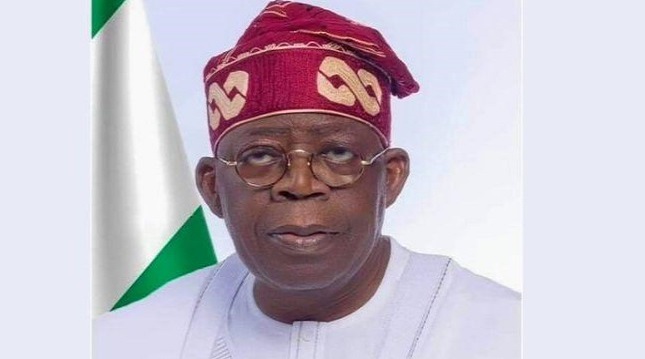
President Bola Tinubu has already signed the four tax reform bills into law, describing them as the most significant overhaul of Nigeria’s tax system in decades.

The reforms — the Nigeria Tax Act, Nigeria Tax Administration Act, Nigeria Revenue Service (Establishment) Act, and Joint Revenue Board (Establishment) Act — are scheduled to take effect on January 1, 2026, under a unified Nigeria Revenue Service.


Kindly share this post
Continue Reading

Trending