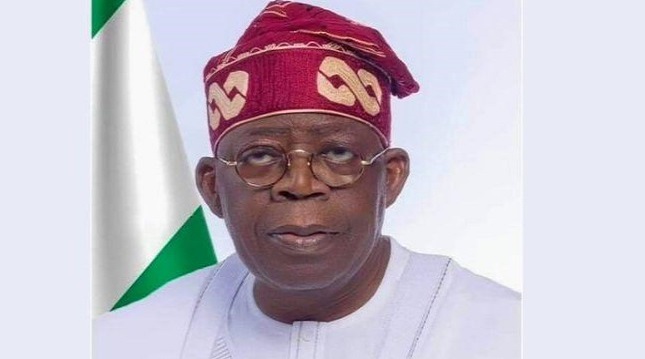
Olubunmi Ekundare, is Intel Nigeria country manager since mid-2011 with over 20 years of experience working in the Nigeria’s technology sector.
He joined Intel in 2008 as Corporate Affairs Manager, West Africa. Ekundare holds a B. Sc in Social Administration and has considerable experience in both the public and private sectors including senior consulting assignments for LM Ericsson; worked with the Financial Institutions Training centre (FITC) and as General Manager/CEO of One World Communications - one of the largest Internet Service Providers in Nigeria.
In this interview with Miebi Senge, he outlines Intel’s on-going activities and vision for the country’s ICT industry.
Intel’s ‘Create your Tomorrow’ Initiative
Create your tomorrow recognises the fact that Nigerians have a lot of potentials. We have a very high percentage of youth population in Nigeria and as you know, the economy is not ideally what you would want to be; so we came up with this programme in order to help the youth create a better tomorrow for themselves.
Whether they want to be entrepreneurs, whether they want to work in companies, whether they want to start a business for themselves, how do we help them?
Technology is a great vehicle to creating a better tomorrow, so we are looking at it from the perspective of how do we us technology to create a better future for country and for us as individuals. That is why we came up with this idea.
How the Nigerian Market Factors in Chips Manufacturing
We are a chips company but we are much more than that. We are into a lot of things - whether it is health, whether it is education.
When you look at it specifically in terms of the chips industry, it takes a lot for us to be able to set up something that comes close to manufacturing chips. For example, one of the most critical elements is infrastructure.
Power is very important because you have industries that run constantly for years without having to power down. If you look at it from the power angle alone, it is quite enormous. Again, if you look at it in terms of what is required to put up a factory, an average factory that Intel will put up will cost close to $10 billion.
It is a huge investment because of what we produce. I think down the line in the not too distant future, we should be talking of something similar in Nigeria. We have seen a lot of improvements in terms of infrastructure.
I believe that with the government’s Vision of 20:2020 initiative, maybe by the time we are getting there we can begin to say we have enough structural base to begin to manufacture hi-tech products in Nigeria.
Role of Intel in Development of Critical Infrastructure
Part of the things we want to do is working in terms of our in technology. How do we make some of these devices have a longer life span?
We know power is a problem; but if we look at it from our own perspective, how do we make products that would not only give the necessary features but can last maybe up to 20 hours before it is recharged.
So we are looking at it from that perspective. How can we produce devices that can last longer in areas where normally power would not be available?
We already have some of those products in the market- we have the ultra book which has maybe double the life of a usual PCs, maybe some six to ten hours.
And if you take that in a day you probably will be able to do a lot of things within those ten hours till the time you would need to recharge your device.
Working with Local IT OEMs
We come into the market not as a competitor. We enable the ecosystem and we work with all the local OEMs here, some of them are even going into device manufacturing and we are helping them.
Some of them already assemble locally and we have inputs in those assembling.
If you go to some of these organisations, they will tell you that what they use are Intel products to manufacture what they want to do.
I think part of the work we need to do is take it to a higher level where those products can be better improved on and then create that sense that Nigerian products are also very good as opposed to buying products from outside.
Pushing Production of e-Readers
Again, that is a good device. I talked about the Compute-continue; if you look at it today, what device can give you the best return on investment? It still remains the PC because with the PC you can multi-task, you can download and while you are downloading, you can do other things.
You can do your assignments, you can communicate, and you can even use your PC as a phone these days.
While the e-reader is good, the PC still remains a very valuable tool. What we have done in the last two years is either we are manufacturing PCs that are focused on education.
I am sure you must have heard about the Intel Classmate PC, it is an education device specifically focused on education but allows the student to also do so many other things. Technology is evolving and probably down in the future, we can see an e-reader that can do what the computer can do.
For now, the computer remains a device that you can use in a multi-tasking environment.
Solution to CDMA Crisis
I think the CDMA technology from the point of view of the technology.
What is the research that is ongoing there and how can we in Nigeria for example, how fast can we absolve those technologies. I think it has to do with that.
The technology is available but other things come to play when you are talking about the development of a special area.
What is the capacity, how can people in that industry increase their capacity?
What we are trying to do on our part is to produce technologies that are faster and cheaper for them to develop that sector.
As we go along, you will see more of those things coming up - Intel helping in that sector and helping them to increase their business.
Growing Broadband in Nigeria
Broadband is one of our major focuses as company in Nigeria. How do we make broadband and connectivity? How do we take it to the last mile?
That is a critical aspect and we are working with the telcos, we are working with even some of the cable companies that have landed cables at the beach to see how we can develop enabling programmes.
It might be specialized programmes for certain players in the country or certain groups or certain cache around the country.
How do we help them, how do we make things available? We are already doing quite a lot with the telcos. I am sure you have seen the education bundle that Intel is partnering with MTN.
What we are saying is; MTN is helping to provide connectivity deeper into the country in such a way that people who buy PCs and go to Potiskum or Lokoja, can get the same connectivity as they would have in Lagos.
So the MTN bundle is one of those programmes we are doing to make connectivity more affordable, available, and ease the burden over a wider range of areas.
Doing Business with Government
What we do is enable the ecosystem. We help based on what we have done in other countries. We call it Best Known Methods – what have we done in other countries that have helped the governments to better the lives of their people?
Whether it is in terms of infrastructure or whether it is in terms of services. We have our hands in a lot of these things and we bring those experiences to bear.
If you are working with a company and you are working with the government from the point of view of helping to share the knowledge you have, I think it would work very, very well. We do not have any problem with working with the government.
The government as it is, is quite forward looking. If you look at everything the president said; if you look at what the minister of ICT said, a lot of it is how do we get infrastructure, how do we improve?
The president made a speech on Independence Day and I think it was one of the best speeches I have heard in a long time.
He was not just talking about where we want to be but also examples to say this is what we have been able to do and this is what we are trying to achieve.
You know you can be constructive even in criticism. If you work in a very constructive way from the point of view of helping and enabling the economy, you will not have any problem working with government.
Intel’s Goal for Nigeria in Five Years
We want to see Nigeria as one of the top ICT countries in the world. I want to be able to sit in any village in Nigeria and have broadband connectivity.
I want to be able to talk to anybody from anywhere in the world, whether I am in Lagos or I am in my village. We are getting there with phones but how do we get there with PCs and internet. That is our vision in the next five years.
Intel Wants Nationwide Broadband Connectivity – Ekundare
cwadmin18 Oct 20120 Comments

Olubunmi Ekundare, is Intel Nigeria country manager since mid-2011 with over 20 years of experience working in the Nigeria’s technology sector. He joined Intel in 2008 as Corporate Affairs Manager,…
c
Published by
cwadmin
Trained and practicing journalist passionate about telecommunications, fintech, cybersecurity, and digital economy reporting.
You May Like

U. S. Mission Nigeria Celebrates Azih, Nigerian for Fintech Innovation

Autobrake Failure Contributed to Enugu Air’s Benin Runway Overrun - NSIB
NLNG, NCDMB Boost Engineering Research with Innovation Centre
NITDA Seals Strategic Deals with Goose FL and Fireflies AI to Power $1 Trillion Digital Economy Vision
Anambra Seeks Digital Inclusion in Rural Communities