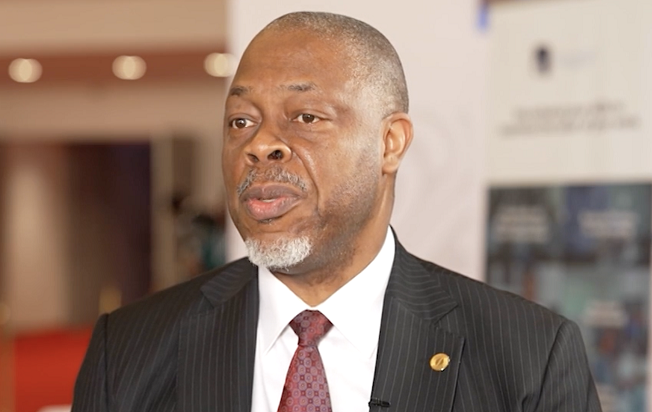
In the latest episode of CNN’s Marketplace Africa, Victoria Rubadiri speaks with Michael Ogbalu, Chief Executive Officer of the Pan-African Payment and Settlement System (PAPSS), about how the platform is helping to transform cross-border payments and drive trade across Africa.
Ogbalu explains that PAPSS was created to remove barriers to intra African trade by enabling businesses, corporates and individuals to make payments between African countries using local currencies.
He tells Rubadiri, “PAPSS is a payment infrastructure that is designed to help accelerate trade on the African continent. It allows businesses, corporates, and individuals to be able to make payment from one country to the other, originating in one local currency and terminating in the other local currency.”
Discussing the challenges the platform aims to address, Ogbalu highlights the high cost and slow speed of traditional payment systems across the continent. He explains, “If you look at some of the most expensive corridors in the globe, actually you have them mostly in Africa.
“So, the question is, how come the poorest pays the most for payments? So we've reduced that cost by as much as 95%.” He adds, “We've been able to reduce the time for processing those payments by over 98%. So now every payment originates and completes within 120 seconds.”
Since launching in 2022, PAPSS has expanded rapidly, with services now available in 20 countries across Africa, connecting 170 commercial banks and 16 payment switches. Ogbalu tells Rubadiri that commitments from additional markets could see the network grow to at least 34 countries in the coming months.
The conversation also explores PAPSS’ ambitions beyond Africa. Speaking from the Afri-Caribbean Investment Summit, Ogbalu discusses plans to build a similar payment infrastructure across CARICOM member states before linking it directly with PAPSS.
He says, “Suddenly payments into the Caribbeans will be as seamless and it will boost trade.” Reflecting on the broader significance of financial infrastructure, he adds, “Payment systems are essentially tied to the prosperity of nations. And today we are saying to ourselves, we want a payment system that is built for Africa, controlled by Africa, and that will drive Africa's prosperity.”
While discussing the African Continental Free Trade Area (AfCFTA), Ogbalu explains the close relationship between the two initiatives and how modern payment infrastructure can support the continent’s economic ambitions. He tells Rubadiri, “Our payment system actually gives the AfCFTA the installation that it needs to be able to actually survive and make Africa a superpower economically.”
Looking to the future, Ogbalu predicts that PAPSS could help increase intra African trade by as much as 10% to 15% over the next three to five years. He highlights the opportunities the platform could unlock for small businesses, logistics operators and technology companies across the continent, saying, “Small businesses who actually power Africa will begin to see the rest of Africa as their markets.” He adds that the benefits extend beyond the private sector, concluding, “There's benefits for everyone.”