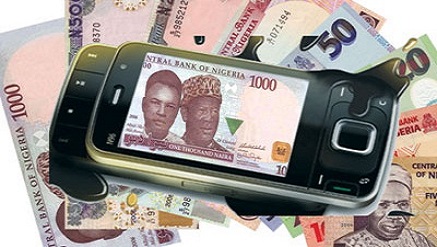
Emmanuel Okoegwale, Principal Associate, Mobilemoney Africa, has said that large number of redundant mobile money agents is a major challenge of the industry.
He said this as figure released by Nigeria Inter-Bank Settlement System (NIBSS) that provides handshake among operators, stated there are 67,000 licensed mobile money agents across the country.
Okoegwale said: “having 67,000 agents is significant by all standards but I believe strongly that a large percentage of them are not actively trading and that is the major challenge of the industry. How to get the recruited agents active, reduce churn and keep them incentivized in a highly fragment mobile financial services industry with low volume transaction is the challenge that has to be address if we are to move forward”.
He added that from regulatory perspective, Nigerian mobile money industry was well thought out to be Bank and non- bank led with limited telecommunications operators’ participation.
“While some industry stakeholders may perceive that as a hurdle, it is actually an opportunity for some others. Though it is clear that in markets where Mobile network operators take the lead, the deployments had been much more successful. Non - telcos that are focused with the right resources can also take up the opportunities if they think there is a compelling reason.”
More so, Eric Barbier, chief executive officer, TransTo, blamed growth of mobilemoney in Nigeria and Africa on regulatory issues.
“It is difficult to get Central Bank of Nigeria (CBN) required approval to send money out of Nigeria because the process is not straight forward”.
He added that regulatory challenge has hindered the growth of digital payment and mobile wallet in Africa, he cited South Africa where MTN on two occasions launched Mobilemoney and it all failed.
Reacting to this, Okoegwale said: “Africa's remittance market is a developing market fueled by diaspora migrant labor and just like many industries in Africa, it has its own share of challenges such as regulation, spread and availability of formal financial services centers, agency network etc. As regulation improves, agency exclusivity removed and growth of other digital channels like transfers to bank account, wallets, mobile money, and agent location pick-ups network expansion will further enhance competition in the market space and hence, cost reduction for the customer.”
He further explained the difficulty faced by Nigerians to carry out bank to wallet mobile money transfer.
“I do not think it is a challenge because it is mandated by regulation but it could be a technical challenge in some instances where application interface of a provider is not able to handshake with the switch operator that will enable the process, however it works for many of the mobile money operators in Nigeria as we speak. More so, Agency firms are beginning to collaborate, super agency licenses had been issued and serious investors are considering making significant investments in the agency space in Nigeria. The upcoming international remittance licensing will also help to drive agency growth and adoption in Nigeria,” he noted.
Redundant MM Agents Hobble Penetration- Experts
Comms Week11 Apr 20160 Comments
Emmanuel Okoegwale, Principal Associate, Mobilemoney Africa, has said that large number of redundant mobile money agents is a major challenge of the industry. He said this as…
C
Published by
Comms Week
Trained and practicing journalist passionate about telecommunications, fintech, cybersecurity, and digital economy reporting.
You May Like

PwC Nigeria Points at Ambiguities in Virtual Assets Tax Rules

SEC Orders Capital Market Operators to Cut Banking, Business Ties with Iran, DPRK

Cyberthreat: New Malware, Turns Phones into Tools for Card Fraud- Report
SEC Clears Blockchain for Accelerated Regulatory Incubation Programme

Leadway Unveils Multi-generational Insurance Plan for Nigerian Families