Connect with us

Telecom

The Risks of Compliance Amidst Citizen Agitation: The MTN Nigeria Example

Published

on

Kindly share this post

By Dr. Ajibola Obafemi

Compliance is often touted as a virtue in business and governance, implying a willingness to adhere to rules and regulations. However, in times of citizen agitation and social unrest, compliance can become a double-edged sword. On one hand, it demonstrates a commitment to upholding the law and respecting authority.

Dr. Ajibola Obafemi

On the other hand, it can be perceived as complicity with a government that citizens are agitating against, hence the compliant company is perceived as an enemy of the people. The recent experience of MTN Nigeria, which suffered social media and physical attacks merely for complying with the regulator’s directive, serves as a stark illustration of this dilemma.

Citizen agitation in Nigeria has been simmering for years, with growing discontent over the government’s handling of various issues, including economic stagnation, insecurity, and corruption. The latest expression of this frustration is the planned August 1 protest, which has been gaining momentum on social media. The basis of the proposed protest is a demand for better governance, which includes bringing down the cost of living with inflation at 34.2%, ending corruption, hunger and highhandedness of the security agencies.

One challenge of the government regarding the call for protest is that it does not know whom the organisers are. Perhaps, this is a good strategy for the organisers, as the government cannot be trusted to not arrest them. The government’s response to the protesters has been characteristically un-empathetic, with officials dismissing their concerns and warning against any form of unrest. This approach has only served to fuel the anger and frustration of the protesters, who feel that their voices are not being heard.

Social media has played a significant role in driving the conversation around the planned protest, with various hashtags trending on Twitter and other platforms. The online campaign has helped to galvanize support for the protest, with many Nigerians expressing their discontent with the government’s handling of various issues. The government has not stayed silent, as its spokespersons and advocates have also been speaking on social media, but they do not seem to be connecting with the agitators online as their approach is largely to use fear-mongering, threats and misinformation. For example, a top functionary of the Tinubu government, Bayo Onanuga, accused Peter Obi, former presidential candidate of the Labour Party, of spearheading the protest in expression of anger over losing the 2023 election. Such blatant attempts to mislead the public have only fueled the protest.

Suffice it to say that the recent wave of protests across Africa, including the violent clashes in Kenya and other parts of the continent, has emboldened Nigerians to demand change through similar means. The successes and challenges faced by these movements have served as a catalyst, inspiring Nigerians to take to the streets and demand better governance. However, this trend has sent jitters down the spines of Nigerian authorities, who fear a repeat of the violence that followed the EndSARS protests in 2020.

Businesses in Nigeria are caught in the web of the civil agitation in the country. According to the World Bank, “In times of social unrest, businesses are often caught in the crossfire, facing risks to their operations, employees, and assets.” MTN witnessed this but in a different form. While Nigerians agitated for good governance, the telcos, including MTN Nigeria, were bothered about a deadline from the Nigerian Communications Commission (NCC) to disconnect all SIMs not linked to NIN by the 31st of July. On July 27 to July 28, the company disconnected millions of unlinked lines, in compliance with the regulator’s directive. This action nearly devastated the company, triggering a swarm of unimaginable issues.

The backlash was swift and brutal. Protesters took to Twitter to express their outrage, with some suggesting that MTN had collaborated with the government to disrupt the protest. Omoyele Sowore, a former Presidential Candidate of the African Action Congress (AAC) and lifelong activist, even suggested that the protest would commence at MTN offices, implying that the company was complicit in the government’s plans to sabotage the planned protest. The next day, MTN offices were besieged by angry protesters, with the Festac office being destroyed and looted.

While it seemed like it might have been cataclysmic for the company, the Association of Licenced Telecom Operators of Nigeria (ALTON) and the Nigerian Communications Commission (NCC) came to the rescue, clarifying that MTN was only complying with an industry-wide directive and that the action of the company had nothing to do with the planned protest. To ease off the tension, the NCC mandated telcos to unblock lines that were blocked during the period, allowing for a de-escalation of the tension.

Critical questions come to mind on what MTN could have done differently in the circumstance. Could it have decided not to comply with the regulator’s directive? Perhaps. But this would only strain the relationship with the regulator, with the risk of a fine. It should be added that the company was once fined $5.2 billion for failing to disconnect millions of unregistered lines in the past. In light of this, can anyone blame the company for striving to be compliant, as it has been in recent years, winning the award for Most Compliant Listed company in Nigeria year after year?

While it is not abnormal to have businesses suffer attacks during civil unrest in Nigeria, as witnessed during the EndSars protest where many businesses were either vandalized or burnt, the subject of compliance amid civil agitation is a new perspective which has not received sufficient attention by scholars and commentators. This is a gap which needs to be filled in the field of regulatory compliance. The ball is now in the court of the scholars to interrogate the issues for corporates to take learnings. The business community has too much at stake for such a gap to exist.

The recent attack on MTN Nigeria, a company which is vital to Nigeria’s social, digital and economic life, shows that the Nigerian society needs a lot of conscientization of the people with regards to corporate issues. It appears that the Nigerian is angry against big businesses, hence they are quick to respond violently, unmindful of the overarching consequences even on themselves and their country. If MTN Nigeria were not a firmly rooted company in Nigeria, the social media attacks launched against the company could have crippled it. Nigeria needs more ‘MTNs,’ to raise its revenue generation, support the economy and ultimately improve the lives of the average Nigerian.

In the midst of civil unrest, regulatory compliance can be a delicate balancing act. To minimize risk, regulators and companies must prioritize clear communication and empathy. In the case of the SIM-NIN linking deadline, the regulator could have considered postponing the deadline to diffuse tension and avoid exacerbating the situation. This would have allowed MTN and other telcos to comply with the directive without inadvertently fueling the flames of protest. Additionally, the regulator could have proactively clarified the reasons behind the directive, addressing concerns and misconceptions before they escalated into widespread outrage.

As a market leader, MTN Nigeria is becoming synonymous with the sector, and hence suffers attacks when there are sectoral issues. These isolated attacks on the company work in favor of competing telcos, raising the question of whether there are forces fueling the attacks against the company. Whenever there is a general network downtime in the country, such as on the commencement day of the hunger protest, MTN is singled out for heavy backlash, even when other telcos experience similar issues. While the social media attacks on August 1st were not a case of compliance by the telcos, it is pertinent for the public to realise that the digital industry is bound to occasionally encounter network challenges, even as the government may even be complicit in sabotaging networks to suppress the public. The telecom operators, such as MTN, Glo, and Airtel, are always at these crossroads as critical and strategic entities in the fabric of the country.

In conclusion, the recent SIM-NIN linking debacle serves as a cautionary tale for regulators and companies operating in tumultuous environments. By prioritizing empathy, clear communication, and strategic timing, they can minimize risk and avoid becoming entangled in the web of civil unrest. As Nigeria navigates its current challenges, regulators and companies must learn from this experience, recognizing that compliance and sensitivity are not mutually exclusive, but rather complementary aspects of responsible business practice.

Dr. Ajibola Obafemi is a Political Science Lecturer at the National Open University of Nigeria (NOUN) and the Head Researcher at QL Intelligence.


Kindly share this post

Ugo Onwuaso is an ICT enthusiast. He believes technology should be used for general good. He holds a Master of Public Administration (MPA) degree from the Lagos state University. Dear Reader, Your support matters. But we believe that technology makes life more exciting and helps improve the lives of people around Nigeria and indeed the world. That is why, we have devoted our energy to independent reportage of technology and finance and how they affect lives. Our incisive and analytical view of how technology news affects the daily life help individuals and organizations make up their minds. Quality journalism costs money. Today, we're asking that you support us to do more. Kindly support our effort to deliver technology and finance journalism to everyone in the world. Donate as little as N1,000. Bank transfers can be made to: UBA Plc 1017156876 Communication Week Media Ltd

Telecom

NCC Ranked Among Top 3 MDAs for Best Website Performance in 2025

Published

on

Kindly share this post

Bureau of Public Service Reforms (BPSR) has named the Nigerian Communications Commission (NCC) among the top three Ministries, Departments and Agencies (MDAs) of the Federal Government with the Best Ranking in Website Performance for 2025.

NCC Ranked Among Top 3 MDAs for Best Website Performance in 2025

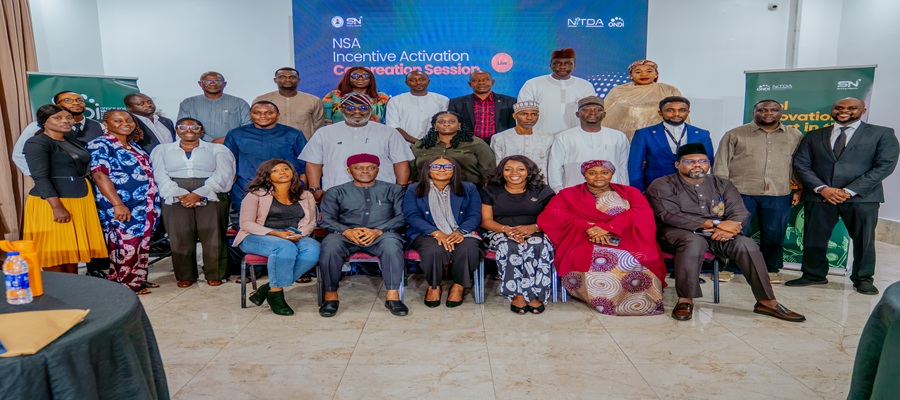
L-R: Head Special Projects, Nigerian Export Promotion Council (NEPC), Salamatu Andu; Executive Commissioner, Technical Services, Nigerian Communication Commission (NCC), Engr. Abaraham Oshadame; Director General Bureau of Public Service Reforms (BPSR), Head Customer Support Service, Galaxy Backbone, Rosemary Ehize; Secretary to the ES. Nigerian Content Development and Monitoring Board, Tahir Aminu at the BPSR award ceremony for top four MDAs in BPSR Website Performance and Ranking 2025 at the BPSR office on Tuesday, 23rd December, 2025.

This is coming barely three weeks after the telecom regulator was recognized as one of the top five best-performing Federal Government agencies for 2025 by the Presidential Enabling Business Environment Council (PEBEC) – a testament to the Commission’s consistency in investment in technology for ensuring efficient service delivery.

In the BPSR 2024/2025 scorecard ranking of agencies’ websites, the NCC came second in the ranking, trailing behind Galaxy Backbone Limited, which came first while the Nigeria Export Promotion Council (NEPC) clinched the third position, from a pool of 235 MDAs, whose website were evaluated.

BPSR deployed 14 evaluation criteria in include MDA’s website compliance with .gov.ng domain name, appearance and aesthetics (look and feel) of the website, content, relevance to MDAs mandate/government policy and the website’ structure.

Others include website’s responsiveness (device compatibility), security, load time, usability/ease of navigation, availability/uptime, functionality, interactivity, accessibility and capacity building.

The recognition was announced at the official release of Federal Government 2024/2025 Scorecard Ranking for MDAs’ Website held at the Federal Ministry of Finance Auditorium in Abuja on Monday (December 22, 2025) while the award presentation took place at BPSR’s Office on Tuesday (December 23, 2025).

The award, which is an important index metric of the National e-Government Masterplan for determining the Nigeria e-Government Status, was received by the Commission in recognition of its commitment to maintaining a world-class website that enhances service delivery to the citizens.

Receiving the award on behalf of the Executive Vice Chairman of the NCC, Dr. Aminu Maida, the NCC’s Executive Commissioner, Technical Services, Abraham Oshadami, appreciated the BPSR for the recognition, describing the award as “another encouragement for the Commission to be a better public service institution leveraging digital platforms such as our web presence to enhance public service delivery to our various stakeholders, thereby implementing the Federal Government’s Ease of Doing Business policy direction.”

While presenting the award to the NCC, alongside other two agencies, BPSR’s Director-General, Mr. Dasuki Arabi, commended the top three for their proactive decisions in maintaining world-class websites, which are compliant with the Federal Government’s policy direction in effective and efficient service delivery to the citizens.

According to the DG, the 2024/2025 MDA’s websites’ ranking represents a collective effort of federal public institutions in Nigeria to be transparent, accountable and open in governance, as well as a confirmation to align with global best practices in service delivery to the citizens.

Developed about six years ago, Arabi said as a result of the annual ranking, more public institutions have indicated readiness to embrace reforms, and align with the policy direction of the current administration’s Renewed Hope agenda on improve governance for effective service delivery, as introduced by His Excellency President Bola Ahmed Tinubu.

“The ideals of harnessing and deploying technological tools for service delivery has become imperative following the COVID pandemic, and distortions of socio-economic system of nations, culminating in the evolution of competitiveness, cost effectiveness, and agile governance.

“As engine room of governance, it behoves on us in the public service to perform our statutory duties and we must put in place technological innovations and standardized websites to operate services as well as deliver service needs to citizens,” he said.

The Scorecard exercise, he said, is part of the BPSR reform broader function of conducting research on reform implementation efforts and presenting ‘best practice’ models to the entire Public Service, and to among others, improve access to government information, facilitate seamless financial transaction, eliminate corruption and cyber theft, as well as facilitate access to government services.

Speaking on the rigorous nature of the exercise that produced the top three winners, the DG said “in the past few weeks members of the Scorecard Jury drawn from inter-Ministerial Agencies, had worked tirelessly to mill websites of selected MDAs through a rigorous process of enduring criteria for the ranking and the outcome had also passed through a quality assurance mechanism to validate the outcome.”


Kindly share this post
Continue Reading

Telecom

Oyedele Dismisses Claims Bank Accounts Without TIN Will Be Frozen

Published

on

Kindly share this post

Taiwo Oyedele, Chairman of the Presidential Committee on Fiscal Policy and Tax Reforms, has dismissed reports that bank accounts not linked to a Tax Identification Number (TIN) will be frozen or automatically debited from January 1, 2026.

Oyedele Dismisses Claims Bank Accounts Without TIN Will Be Frozen

Taiwo Oyedele

Oyedele described the claims as false and misleading, warning Nigerians against panic over misinformation surrounding recent tax and financial reforms.

In a post on his X handle Tuesday morning, he wrote: “Don’t let anyone manipulate you. Your bank account is safe. Misinformation makes you panic and fear a reform that is designed to help you.

“When they tell you that your account will be frozen or automatically debited from January 2026, ask them for the evidence in the new law. Be wise.”

He stressed that no provision in the new tax laws authorises the freezing of bank accounts, adding that the rumours are part of widespread misrepresentation of the reforms.

The committee chairman reiterated that the reforms are intended to simplify Nigeria’s tax system and ease the burden on ordinary citizens, not to impose punitive measures on bank customers.


Kindly share this post
Continue Reading

Telecom

Amazon Blocks 1,800 North Koreans From Job Applications

Published

on

AMAZON
Kindly share this post

US tech giant, Amazon has disclosed that it blocked more than 1,800 North Koreans from applying for jobs, amid growing concerns that Pyongyang is deploying large numbers of IT workers overseas to earn and launder funds.

Amazon Blocks 1,800 North Koreans From Job Applications

Amazon

In a LinkedIn post, Amazon’s Chief Security Officer, Stephen Schmidt, said North Korean nationals have been attempting to secure remote IT roles with companies around the world, particularly in the United States.

He noted that the company recorded nearly a one-third increase in such applications over the past year.

According to Schmidt, many of the applicants operate through so-called “laptop farms” — computers physically located in the US but remotely controlled from abroad.

He warned that the issue is not unique to Amazon and is likely occurring at scale across the tech industry.

He added that common red flags include incorrectly formatted phone numbers and questionable academic credentials.

The issue has previously drawn the attention of US authorities. In July, a woman in Arizona was sentenced to more than eight years in prison for running a laptop farm that helped North Korean IT workers obtain remote jobs at more than 300 US companies.

Officials said the scheme generated over $17 million in revenue for both the woman and North Korea.

Last year, South Korea’s intelligence agency also warned that North Korean operatives were using LinkedIn to pose as recruiters, approaching South Koreans working at defence companies in an attempt to steal sensitive technological information.

“North Korea is actively training cyber personnel and infiltrating key locations worldwide,” Hong Min, an analyst at the Korea Institute for National Unification, told AFP.

He added that, given Amazon’s business model, the motivation behind such operations is largely economic, with a high likelihood of attempts to steal financial assets.

North Korea’s cyber warfare programme dates back to at least the mid-1990s and has since expanded into a cyber unit of about 6,000 personnel known as Bureau 121, according to a 2020 US military report.

In November, Washington announced sanctions against eight individuals accused of being state-sponsored hackers, alleging their illicit activities were carried out to fund North Korea’s nuclear weapons programme.

The US Treasury has also accused North Korea-linked cybercriminals of stealing more than $3 billion over the past three years, primarily through cryptocurrency-related crimes.


Kindly share this post
Continue Reading

Trending