Operators in the telecommunications space of the country’s economy have not had peace of mind in the last six years in the process of service delivery as they are confronted with several challenges.
Unfortunately, most of the challenges have little or no relationship with the process of service delivery.
Operators are faced with security issues at base stations, unfriendly host communities, vandalization among others.
In view of all these that operators took measures to address some of the issues which are distracting them from their main business of service delivery.
Among some of the initiatives are adoption of collocation, and outsourcing of base stations to infrastructure providers.
As these initiatives were gradually addressing the known problem that other challenges began raising their head, and they are multiple regulation and taxation.
In a federal system there are issues reserved for either federal or state to legislate on and the ones both have powers to regulate.
In the case of telecommunications, it is the federal that has exclusive right to regulate the industry which led it into establishing a Commission in the name of Nigerian Communications Commission (NCC) backed with an act to effectively perform that function.
However, events in the recent past suggest that other federal government agencies as well as states are now making effort to usurp NCC’s function in the telecommunications industry which is unknown to the country’s law.
It has become a common practice for any government agency be it federal or state to solicits for one levy or the other from operators while some seek that operators secure one approval or the other from them which comes with a fee before they can build infrastructure.
It is not telecommunications operators that are lamenting over multiple taxation, operators in the manufacturing sector have continued to call for a lasting solution to the problem of multiple taxation in the country.
According to them, if the problem is not addressed, business will continue to suffer.
With the challenges of poor infrastructure which is killing business in one hand and the headache of multiple taxation have been identified as another major threat to manufacturers and investors.
Speaking on the implication of multiple taxation, Otunba Femi Deru, President, Lagos Chamber of Commerce and Industry, said that as Constitution empowered Local Governments to enact law that will create a situation were they will generate revenue, such as vehicle license, radio, television, business premises levy among others. He added that these taxes are becoming rampant and hindrance to business development in the country.
Dr. Emmanuel Ekuem, former president of the Association of Telecommunications Companies of Nigeria (Atcon) called on the government to address the issue of multiple taxation which is currently a threat to development of telecommunications in the country.
He said a situation in which operators in the telecoms industry were seen as cash cows should be a thing of the past.
He reasoned that government in the land should note that telecoms business attracts operational cost and that when the number of taxes paid by the operators increase just because all tiers of government want their various shares of the “cake,” it engenders less profits for the operators and compromise quality of service.
Mr. Ayodele Adigun, President, Chartered Institute of Taxation of Nigeria, said that multiple taxation in Nigeria militate against standard taxation practice, which is unhealthy for economic development.
He blamed the activities of quacks in the system for this situation and also described the practice as an evil one, noting that the institute was all out to combat this trend.
According to him, CITN was championing professional taxation practice in the country and also organising an awareness campaign to sensitize the public on the need to voluntary pay approved taxes.
He added that multiple tax and poor infrastructure had also made the environment extremely inclement and uncompetitive for locally made goods against those from other nations.
It is unfortunate that officials from government quarters seem not to understand the issue of multiple taxes but are looking at it as tax evasion.
The issue is clear and does not need interpretation.
Operators are not saying that they won’t pay tax to government and its relevant authorities but duplication of the same tax which they have already paid to government at the federal or state levels is inimical and put pressure on them.
The question is, how can one reconcile a situation where a telecom operator whose services are controlled by federal government pays relevant taxes or levies to federal and state governments, and are also forced to pay similar taxes not approval levy by local governments.
As operators are seeking ways to address the issue of multiple taxation that another government agency, National Environmental Standards and Regulations Enforcement Agency (Nesrea) came out with Environmental Impact Assessment for base stations of telecom operators.
NCC has a department that enforces standard in the manner operators build their infrastructure, instead of Nesrea liaising with that department of NCC to ensure that those issues it said are raised by the public, it is now enforcing its order on companies that are not under its regulatory jurisdiction.
In a similar vein, the newly established agency Urban Furniture Regulatory Unit under the Ministry of Physical Planning & Urban Development has been in loggerhead with telecom operators over the former threat and demolition of base transceiver station on the basis that owners of such BTS did not get approval from it when the operator has gotten the necessary approval from NCC and other federal agency required by law.
In view of all these that stakeholders who spoke to Nigeria CommunicationsWeek are calling for streamlining of regulations in the telecommunications industry as well harmonization of relevant levies in order not to destroy and discourage investment in the sector which is expected to boom with the envisage abundance of bandwidth occasioned by the landing of undersea cables in the country.
The Threat of Multiple Regulations in Telecom
cwadmin13 Aug 20120 Comments

Operators in the telecommunications space of the country’s economy have not had peace of mind in the last six years in the process of service delivery as they are confronted with several challenges.…
c
Published by
cwadmin
Trained and practicing journalist passionate about telecommunications, fintech, cybersecurity, and digital economy reporting.
You May Like

U. S. Mission Nigeria Celebrates Azih, Nigerian for Fintech Innovation
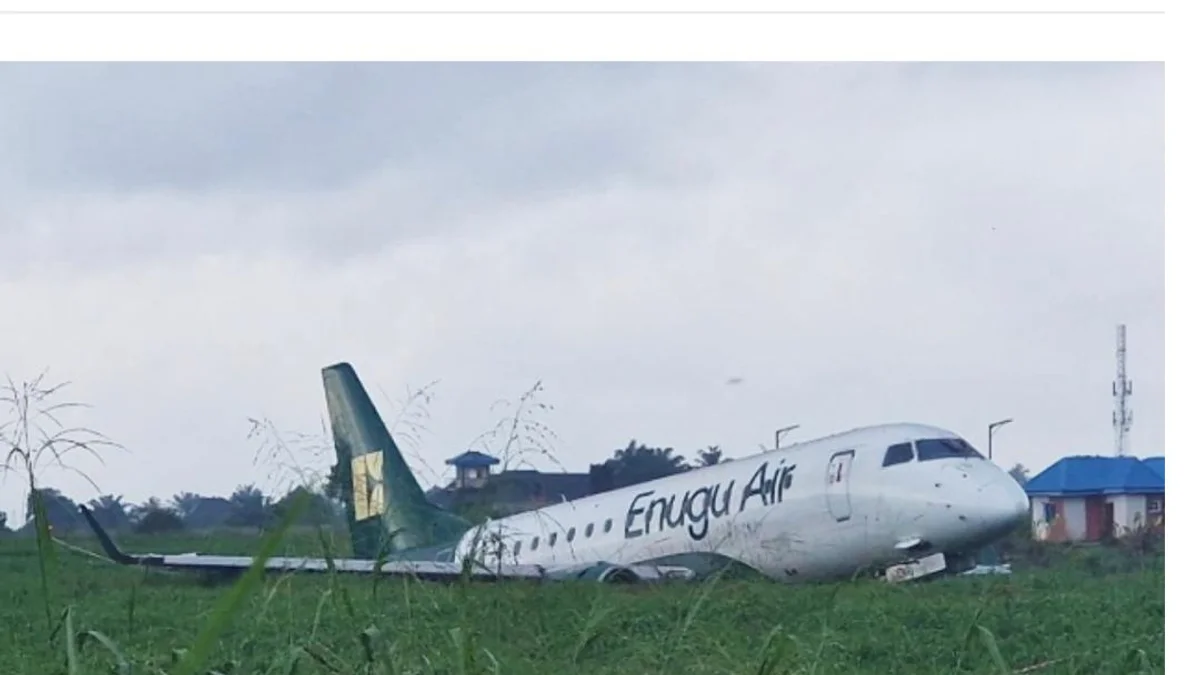
Autobrake Failure Contributed to Enugu Air’s Benin Runway Overrun - NSIB

NLNG, NCDMB Boost Engineering Research with Innovation Centre
NITDA Seals Strategic Deals with Goose FL and Fireflies AI to Power $1 Trillion Digital Economy Vision
Anambra Seeks Digital Inclusion in Rural Communities