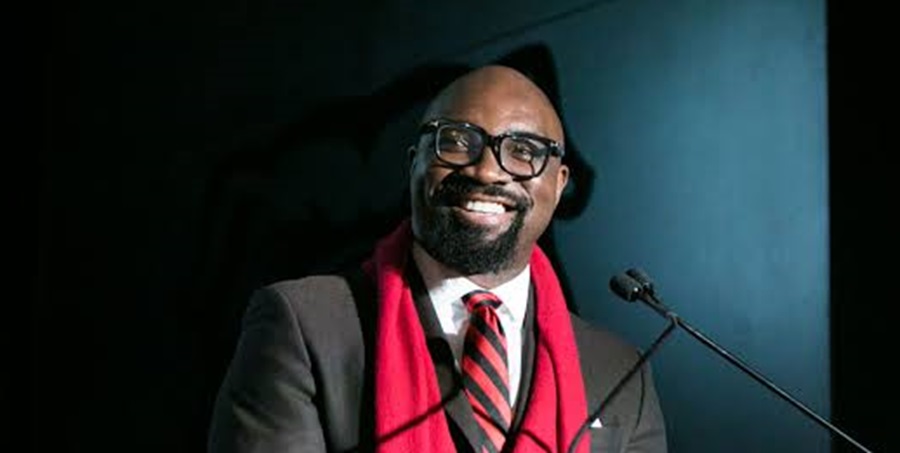
Stanley Jegede is the chief executive officer of Phase 3 Telecom, a company with one of the largest fibre backbone network in Nigeria. Jegede has a Master degree from Middlesex University, U.K in Business Information System, and has worked with key telcos in the U.S and UK. He decided to come back home to ensure that Nigeria gets the most reliable infrastructure for quality services to the end users. Jegede spoke to Chris Alu in Abuja.
Phase 3 and Carrier Services
We are coping with it because we have been able to lay fibre optics on cable lines within some of the cities in Nigeria. So with this, we are able to transmit voice and data successfully and also ensure connectivity through this means effectively, without problems.
Partnership with Alheri
Our partnership is to enable us have one network, to ensure that we have the longest fibre optics in the country and also ensure that we provide all the connectivity across all the states. Our goal is to cover as much as 14, 000 kilometers fibre within Nigeria. What I am saying is that our customers leverage on this capacity to provide services. We have laid fibre on power lines in Benin, Jos and Akwanga. We pass traffic on to Alheri and Alheri gets it to the other end. As you know, we have rights to be on power grid and Alheri also has right to be on the same power grid.
We are building ours on the Western end, while Alheri is building on the Eastern end. So, it is a great marriage between us. Our coming together is to make a difference for our dear country in voice, data transmission and connectivity. We are going to ensure that connectivity is at its best so that operators will also provide the best services to their end users.
Alheri’s Chances in the Telecom Industry
Definitely, Alheri is going to surprise Nigerians. They are working towards ensuring they provide the best and reliable infrastructure, and that is why we decided to partner with them to offer services as good as what Phase 3 is offering. It is going to compliment the infrastructure that we have already deployed in the country. They stand a chance of providing quality and needed services within the country.
Challenges of the Operating Environment
Our mode of deployment is completely different; we are not excavating and putting fibre in the ground. We are laying fibre on the power grid, which is quite challenging because we do this with helicopters. We have engineers that are regarded as the best in power lines who are as skilled as expatriates in this area. The challenges are getting the best people that can do the job and building the most reliable fibre optic infrastructure not only in Nigeria, but in West Africa. So far, we have done well in that regard.
Fibre Optic Project
It is actually from the West and connects to the Eastern part of the country. Phase 3 is taking it from the Western part, while Alheri is running from the Eastern part of Nigeria. Like I said earlier, we are connected in Benin, Jos and Akwanga, and they are the three major cities that we are going to be joining with Alheri and passing on huge amount of capacity, which Alheri will successfully deliver. Again, be aware that we are located in every substation in the country and as such, we do not require generators to power our equipment on transmission. So, that gives us an edge.
Laws of the Country on both Telecom Operators and Your Services
I believe the regulators have made the approach to operating in the industry quite clear. There are rules and there are processes. Government has supported every operator in every way possible, and has given us an enabling environment to operate. Although we have some little bottlenecks, but we are working closely with the regulators to offer what is required as the needed transmission infrastructure in the country, and they have given us much support.
Proliferation of Optic fibre on Power Lines and Ground
Phase 3 will only concentrate on its core business - providing services to the end users like you and I, and not providing services and also running backbone. Some operators have gone ahead to build infrastructure not because they really wanted to, but because at the time those decisions were made, they did not have anything to rely on. Nitel was unable to build infrastructure which they would rely on, so they had to fashion something to transmit with. But with Phase 3 Telecom providing and building a reliable infrastructure, it makes business sense for operators to take all their transmission needs to a transmission provider like us to provide the services. That would enable them to concentrate on what their core business is.
Quality of Telecom Services, Nine Years after Telecom Revolution
In terms of services, we have done very well in Nigeria. In the first five to six years when mobile telephony was launched, the telcos had problems and challenges. A lot of things that affect services can be attributed to power and issues like transmission. Now I can say that we are getting better and we will get a lot better. The operators are doing everything possible to improve on the quality of service.
Contribution to Health Insurance Scheme aside other Taxes, Levies
It would be a burden on operators to pay more out of their revenue. It is probably going to be a long and daunting task for most of the operators, especially now that there is global economic recession. For me, I think it is time to think strategically and try to keep spending minimal.
Services to Financial Institutions
What we have is dynamic. It is not just for operators. Operators are the ones that require huge capacities more than other clients and we have such provisions. Our infrastructure is for everyone - multinationals, corporate organizations, banks, businesses, parastatals, ministries, GSM and CDMA operators. These customers can ride on our infrastructure to get from one city to another, not only in Nigeria but in the entire West African region. Phase 3 is at the forefront of supporting sub regional integration.
Phase 3’s Investment in the ECOWAS Sub Region in Three Years
We have so far spent over $100mliion in building the existing infrastructure, and our target is to spend another $200 million to actualize the region’s connectivity.
Direction of the Telecoms Industry
I think the telecom industry is a big industry. Transmission is just one aspect; building infrastructure within Nigeria is another aspect. The industry will continue to grow; there is room for great achievement, and we would see the number of subscribers increase significantly above what we see now, because there is market for 140 million people.
Global Crisis and the Telecoms
It will definitely affect the industry but not badly. Like I said, this is the time to think strategically. Operators and infrastructure providers should look at the most commercially viable aspect of their businesses and pay attention to that. While we are going through the recession period, spending should be low because operators will continue to exist, players will continue to come into the market. This is just the time to be mindful of what we are doing.
New Players in the Telecoms Market Considering Meltdown
They will cope. Visafone is a new player and their subscriber base is over a million now.
Etisalat is also doing well, and I assure you that if other operators come in with new concepts, they will do well too and with the number portability initiative by the NCC, people can move from one line to another without changing their numbers. The market is theirs.
Sea Cable and Power Line
It would complement our infrastructure. If see cable comes into the sub region with IP bandwidth, we have to work with the provider of this IP bandwidth to distribute them across the country. It would definitely complement our services.
.