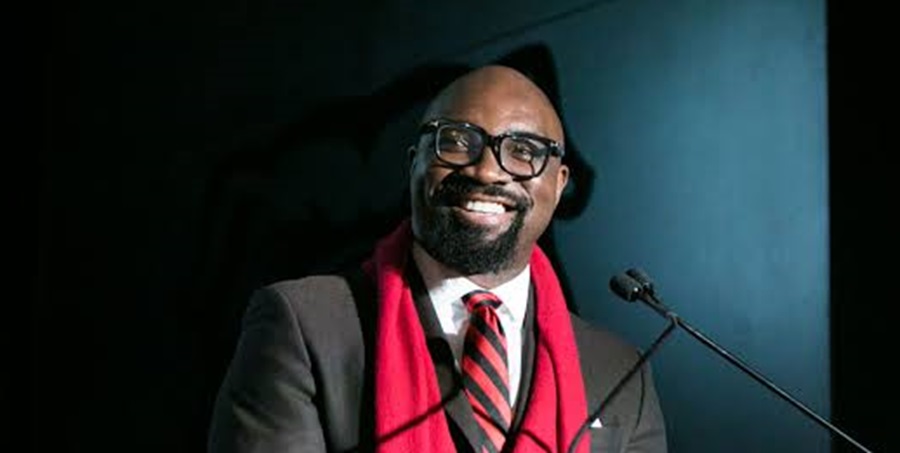
Folarin Fambegbe, director, Golden Scepter, a company dedicated to become a one-stop shop in records and archives management, is a civil engineer turned banker.
He worked in the defunct City Bank for 17 years.
Fambegbe believes that ICT is a critical force that can help meet the records management demand anchored on providing market-leading levels of trust, security and reliability. He spoke to peter ugwu.
Overview
Golden Scepter is a product of vision. In the course of my working in the bank, records management formed part of my duties.
I discovered that most of the banks in the country do not have good records keeping system; therefore retrieval of documents poses great challenge.
There are cases where directors were been chased by the economic and financial crimes commission (EFCC), not because they do not have the documents, but they could not present documents required during one investigation or the other hence the main problem is that the processes of management of those documents were haphazard in nature.
So, you see managing directors of banks and insurance companies running out of the country. Meanwhile, I and my partner saw that is a problem that must be addressed. So, the starting point for Golden Scepter was when we left the bank in 2003; they later invited us to come and help them out in organizing their archives management system.
However, after the bank capitalization we discovered that other banks have similar problems too. We thought it wise to set up a platform that will serve as a model in organizing institutions’ records management system.
Consequently, other banks expressed interest in us ensuring that their records keeping systems are in other.
GS Phenomenal Growth
The point is that there is a vision and there is a need. Institutions are really concerned on how to keep adequate records management system.
And we as service providers leveraged on that to come into the system.
Even when heads of different companies meet they discuss this among themselves and some of them would always want to maintain proper records keeping knowing the importance.
Today, we have helped a number of banks maintain their records department, bringing them to contemporary practices.
Industry’s Viability
Yes, the industry is viable, but Nigerians orientation towards records management is very low. Some companies would ask you the immediate gains they will generate from such project that is maintaining an updated archive.
The truth remains that when you have adequate document, it will be difficult for anybody to lay false claims, defraud you or take things for granted.
We should ask ourselves what constitutes the bottom-line: when you have increased revenue or decreased expenses then you have bigger profit.
Now, when you have even bigger profit with leakages through outrageous payments due to the fact that you cannot substantiate certain claims or through the injunctions of the law courts following your inability to present certain document(s), the somewhat a big revenue will start to depreciate. What you need to do is to block such leakages.
And it will ensure efficiency in service delivery. Helps in achieving company’s goals, and customer services are better met when you have every bite of information available for use.
How about job creation?
Today we have over 30 staff. So, this is an industry waiting to be explored. With more companies coming on board, definitely we should be expecting that records management industry will add value to the Nigeria’s Economy.
This is just an aspect of the industry, when you talk of document control; it is a very large setting traversing areas like construction, oil and gas, government institutions, etc. is such large because we are referring to documents that are still in use; where you have different strokes of projects going on almost at the same time and in the chain all the parties have to be involved.
Lack of Professionals
The first step is awareness creation. That is why a non-governmental body - Records and Information Management Awareness Foundation (Rima) is doing a great job.
But on our part we train people. We have trained personnel of 44 companies including schools, all within our four years of existence.
Interestingly, the more people are becoming aware of the profession, more companies are willing to absorb, all points to the fact that Nigeria is not an Ireland on its own.
We must embrace the opportunities exiting in this area by encouraging our young ones to embrace the discipline.
The Place of Records Management in Data Security
We highlight the importance of security that is why when we help companies in setting up their archives we advise them to train their staff alongside.
In setting up an archive is not just about the papers, you have to consider the security control measures.
More so, we advise institutions to have documents management policies.
The essence is to stipulate who handles what. There have been cases where companies lose valuable documents due to porous means by which its document bank is handled.
Fight against Corruption
Corruptions are not done from heaven. They are done with documents. So, document control or records management is quite apt in checkmating corruption because if you can trace the document, it serves a large purpose in tracing perpetrators of certain acts.
And in court system, they don’t deal with stories; rather the substantive facts and figures give you an edge over your opponents as the case may be. So, one way to fight corruption is my ensuring that records are kept, well controlled and it can be retrieved when needed; anything short of that is a mirage.
In other words, it will help see justice is neither delayed nor denied.
Government’s Support to the Industry
In the developed countries, the industrial standards are set by the government, thus other have to follow suit.
Apart from that, government needs to intervene by upgrading existing infrastructure in her centers like the National Archives of Nigeria (Nan) just like the Lagos State Government is doing by creating the Records and Archives Bureau.
When the infrastructures are in place, they will motivate our people to study this discipline. At a time we thought of collaborating with different state governments, but we discovered that most of them are not ready to embrace the change and we are also not interesting in becoming part of the corrupt systems; even the government that decry unavailability of employment opportunities for the teeming youths. Why can’t they leverage on this platform to do so?
Now that we are looking at revisiting the 1999 constitution, there is a need to repeal the National Archives Act, for instance, to reflect contemporary practice; come up with something that can assist economy of the country.
Pending that, because government things are very slow, institutions can set up their framework or policies. Once that is done, it will be easier to register Nigeria’s presence in the comity of proper records keeping nations.
Is ICT’s a threat to Archives Management?
No! When people say that the evolution of information communications technology spells doom for the archives management, I would say, we are limiting the scope of the profession.
Although it is not just about filing physical papers or documents, then the electronic documents show that ICT is a complement and can never.
Currently, we are going beyond physical archiving system; therefore, users can seat anywhere and have access to certain document, because information transmission nowadays runs on a speed of light.
If you want to be relevant then have the relevant document that can be accessed 24 hours. ICT has made Archiving become cheaper.
Hence the software is there, there is nothing to fear about, because security can be assured as well.
However, in Golden Scepter we hold the view that records digitization is not a direct substitute to a well organized physical archive.
Remember everybody needs information as contained in a document to operate, but not everybody is connected to the ICT yet, which makes the relevance of physical archives paramount in our day to day activities.
People make a mistake by thinking that electronic records management means there is no paper. What ICT does is to reduce the paper, thereby helping the eco-system.
Today, in Nigeria, what does the court accept as written evidence if not physical documents, like bank statements which is different from original documents that is scanned.
Protection of Physical Archives
When you are talking about physical archives management, there are a lot of things that must be in place for security purpose.
Fire extinguishers are very important. Perhaps, you are not going to sleep in the archives; how do you secure the place from fire? So, there is need to install self-triggered apparatus that will ‘fight’ the fire even with no body present.
The sensitivity of archives demands that you fix CCTVs as well, to monitor movements, which is still IT complementary role.
These are part of the key safety measure that will complete efforts of skilled manpower to ensure the place works optimally.
We have a mechanism to dry wet or flooded documents. For instance, after the July 10, 2011 flood disaster in Lagos, many government and private companies’ documents were drenched. Those who contacted us have better stories to tell.
Professionalism
When we talk of International Standard Organisation (ISO) set standards it depends on the organization that engages in the practice.
Meanwhile, some companies parading themselves as ISO certified are not real. They are certified on papers, but in practice they are below every reasonable standard.
It is in every profession, people cutting corners.
Is not about the certification, but what is behind. Having said that, it is important to embrace the stands; by doing that companies can save cost and protect sensitive projects during executions.
Career
I support the school of thought that our educational curriculum should be revisited to include records and information management.
I have come to understand that not all who studied Library Science can easily practice this. There is still a divide.
You find out that people don’t actually have confidence in their discipline. In developed countries like in US and UK, people are making input to the economy and academic through courses like this.
We can follow suit. Recently, a particular university invited us to come and address that problem for them to cue-in to the modern practice.
Software
Ostensibly, there is no need we looking outward to purchase software for our applications, because what we are looking for are here in Nigeria.
We are now part of the global village.
Meanwhile, when you go to other place, South Africa, United Kingdom, etc, there is a way they keep their records, we should have our template.
Therefore, we can’t fuse their model into our system. So, we are trying to build our standard here, bring it up to meet international standards.