Olusola Ladipo-Ajayi, chairman of the Nigerian Insurers association, (NIA) has reiterated the association’s commitment to its stand that the Nigerian Social Insurance Trust Fund, NSITF, is not competent to handle the workmen’s compensation for workers. According to him, their superior argument is hinged on truth and nothing but the truth. He argued that workmen’s compensation fall within the traditional area of insurance which is within the commercial insurance subject area. He said right from time, workmen’s compensation has never been part of social insurance, stressing that injury and death of workmen have always been covered in the commercial market worldwide. He agreed that the Workmen Compensation Act requires amendment and most of the provisions of the Employees Compensation Bill are welcome by the insurance industry, stressing however that in terms of providing the service, it runs contrary to government policy. “You cannot create a huge monopoly out of the administration of employees’ compensation in this country and entrust it with a corporation that has had problems performing its mandate in the past. We all know the story of NPF and we all know the story of NSITF. I am not talking about the institutions now, what I am saying is that with the way that acts is structured, it has always been covered traditionally,” he said.
Ladipo-Ajayi told media men recently that there are a number of issues that the NIA has raised against the bill, and of which it was depending upon the integrity of the National Assembly to look into. He stressed that under this present provision’s there are discriminative provisions, especially for women, and “one of the things that we don’t really like is that, when two workmen are involved in an injury, in a particular incident, and both of them are on the same scale, they have spent the same number of years, serving their employer, the amount of benefit they will derive from the injury or death will depend on certain variables that have not got anything to do with their employment.” he said. Using the foreman as a basis for explanation, he said if a foreman has spent ten years and the other foreman has spent ten years, if there was an explosion in the factory where they were both working and both of them died, how are you now talking about the number of wives, as if you looked at the family history of an employee before you pay their salaries, that has nothing to do with employment, one man may have a wife, the other may not have, another one may have four wives, but their remuneration has nothing to do with their family size. He explained that “in ordinary insurance, there is an element of discrimination, somebody who works in a construction company, who is opened to more physical injury, should pay higher than someone who is a clerk, a civil servant or who is a banker.” But if you are now “asking the staff of major construction companies, who are constructing bridges, roads, and power station, to pay one per cent of their wages, and you are asking bankers to pay one per cent of their own wages too, what it means is that one party is paying less than the risk he’s introducing, and other party paying much more than the risk he’s introducing, one party is subsidizing the other.” He explained that when you look at rating regime in the Workmen Compensation Act, you see that it takes these elements of discrimination into consideration; the clerk pays about 0.75 per cent because the risk of injury is less. You cannot compare that with someone who spends the greater part of his day on the road. Explaining the volume of premium which workmen’s compensation has contributed over time, he stated that the “Workmen Compensation Act only stipulates the benefit accruable to every employee in given circumstances of injury and death, and there is a provision that the minister of labour should make a regulation making the insurance against those employers liability compulsory. But throughout the life of that Act, no regulation was made.” He added that even in Britain, they don’t talk of Workmen Compensation Act, they talk of employers’ liability, because originally, workmen compensation was meant for lowly paid workers, and sometimes in 1970’s, Britain paid employers liability and they took care of all employees, from the chief executive to messengers, not limited it to daily paid workers alone. The NIA boss stated that “one institution cannot manage all the employees in this country. As insurance companies, there are so many of us, if one insurance company does not do well, you can do business with another, but if the NSITF does not do well, where do you go from there? What is the process of seeking redress? Ordinarily, one of the things we pointed out to the National Assembly, is that in debating that Bill in the house, they ought to provide a comparative analysis of the new Bill with the Act it seeks to abolish, because everything about the Workmen Compensation is not totally useless but just specific, it makes it easy for any fool to calculate the Bill, to the extent that if you lose anything, however big or small, there is an amount to be paid. It is a one and for all Bill. You get you compensation in bulk and you go away. He stressed that the numbers of your dependant are immaterial. But the most important thing is that as an employee of a construction firm, and there is a particular incident, four of you are injured, all of you have equal treatment, because the salary your employer pays you is oblivious of your family size or sex.
Why NIA is Opposed to Workmen’s Compensation under NSITF—Ladipo-Ajayi
Comms Week19 Jul 20100 Comments
Olusola Ladipo-Ajayi, chairman of the Nigerian Insurers association, (NIA) has reiterated the association’s commitment to its stand that the Nigerian Social Insurance Trust Fund, NSITF, is not…
C
Published by
Comms Week
Trained and practicing journalist passionate about telecommunications, fintech, cybersecurity, and digital economy reporting.
You May Like
U. S. Mission Nigeria Celebrates Azih, Nigerian for Fintech Innovation

Autobrake Failure Contributed to Enugu Air’s Benin Runway Overrun - NSIB

NLNG, NCDMB Boost Engineering Research with Innovation Centre
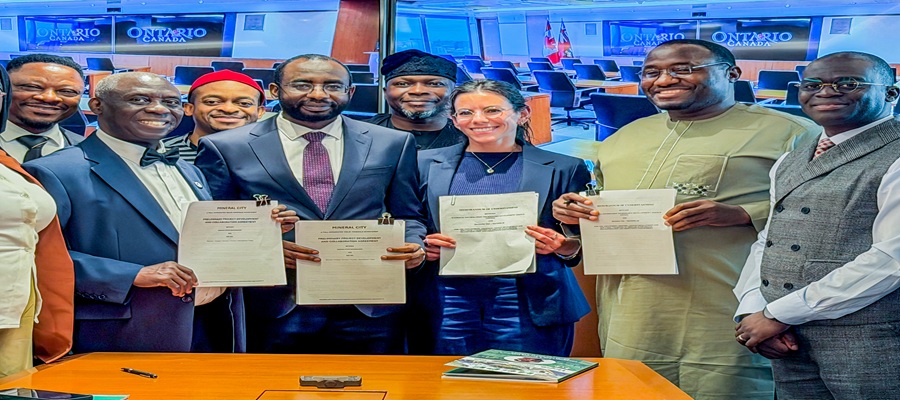
NITDA Seals Strategic Deals with Goose FL and Fireflies AI to Power $1 Trillion Digital Economy Vision
Anambra Seeks Digital Inclusion in Rural Communities