Connect with us

E-Financial

WorldRemit Launches Global Money Transfer Service in the US

Published

on

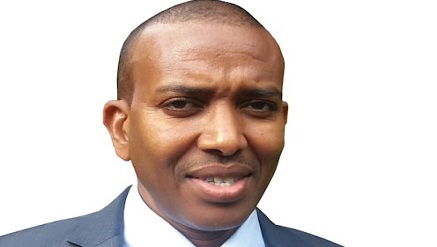
Ismail Ahmed, WorldRemit founder and CEO
Kindly share this post

WorldRemit, online service that lets people send money to friends and family in other countries has announced the launch of its award-winning online money transfer service in the United States.

WorldRemit is known for its global reach of more than 110 receive countries and for offering innovative new ways of receiving transfers including Mobile Money and airtime top-ups, in addition to bank deposit and cash pickup.

The company’s move into the United States marks its most significant expansion to-date.  U.S. residents send more than $50 billion annually to friends and family living overseas, making it the world’s largest sender of remittances.

Ismail Ahmed, WorldRemit founder and CEO, said: “We are bringing something that people in the U.S. have not seen before; a low fees, online money transfer service that offers truly global coverage.  Until now, Africa and parts of Asia have been neglected by most U.S. operators, despite significant immigrant populations.

“This is also a landmark for the European Fintech revolution which has been gathering pace over the last couple of years.  To arrive in the U.S., a country known for technological and financial innovation, with a world-leading service is extremely exciting.”

The launch of WorldRemit in the United States is the latest in a series of significant expansions of the service.  Earlier in November, the company added 15 Latin American countries to the list of destinations from where customers can send money transfers.

In March, Accel Partners – an early backer of Facebook, Spotify and Dropbox – invested $40 million in WorldRemit, the largest ever Series A funding round for a European Fintech company.


Kindly share this post

Nigeria CommunicationsWeek believes that technology makes life more exciting and helps improve the lives of people around Nigeria and indeed the world. So since 2007, we have devoted our energy to independent reportage of technology and how they affect lives.

E-Financial

Access Holdings Shareholders Approved to Raise N40bn Capital Through Private Placement

Published

on

Kindly share this post

Access Holdings Plc has received the approval of its shareholders to raise additional capital of up to N40 billion or such other amount or their equivalent in foreign currencies, via private placement.

The shareholders gave the approval as part of the special resolutions at Access Holdings Plc Extraordinary General Meeting (EGM) held on Thursday December 18.

In a notice to the Nigerian Exchange Limited (NGX), Access Holdings said the new ordinary shares created in connection with the private placement, will be allotted at a price of N20.25 to one or more investors in such tranches and on such terms and conditions as shall be determined by the Board.

Access Holdings Plc Board of Directors is authorised to consider, negotiate, approve, and finalise the list of potential private placement investors; determine the structure, valuation, modalities, and timeline for the private placement.

The Board was also authorised to consider, negotiate, approve and finalise the list of potential private placement investors; determine the structure, valuation, modalities and timeline for the private placement.

The shareholders also approved for the issued share capital of Access Holdings Plc to be increased from N26 658 billion to N27.646 billion by the creation and addition of 1,975,308,641 ordinary shares of 50 kobo each ranking pari-passu with the existing ordinary shares of the Company.


Kindly share this post
Continue Reading

E-Financial

Customs Slam 3 Percent Surcharge on Banks over Delayed Revenue Remittance

Published

on

Kindly share this post

Nigeria Customs Service (NCS) has imposed a three per cent surcharge on Deposit Money Banks (DMBs) over delays in the remittance of Customs revenue by designated banks.

Customs Slam 3 Percent Surcharge on Banks over Delayed Revenue Remittance

The development was disclosed by Abdullahi Maiwada, national public relations officer of the Service,  in a statement titled “Nigeria Customs Service Commences Enforcement of Penalties Against Designated Banks for Delayed Remittance of Customs Revenue.”

The agency stated that delays in remitting collected Customs revenue constitute a breach of remittance obligations and negatively impact the efficiency, transparency and integrity of government revenue administration.

Maiwada explained that any Designated Bank that fails to remit collected Customs revenue within the prescribed period will be liable to penalty interest, adding that affected banks will receive formal notifications detailing the delayed amount, applicable penalty and the timeline for settlement.

“The NCS has noted instances of delayed remittance of Customs revenue by some Designated Banks following reconciliation of collections processed through the B’Odogwu platform. Such delays constitute a breach of remittance obligations and negatively impact the efficiency, transparency and integrity of government revenue administration.

“In line with the provisions of the Service Level Agreement (SLA) executed between the Nigeria Customs Service and Designated Banks, the Service hereby notifies stakeholders of the commencement of enforcement actions against banks found to be in default of agreed remittance timelines.

“Accordingly, any Designated Bank that fails to remit collected Customs revenue within the prescribed period shall be liable to penalty interest calculated at three per cent above the prevailing Nigerian Interbank Offered Rate for the duration of the delay. Affected banks will receive formal notifications indicating the delayed amount, applicable penalty and the timeline for settlement.”

Maiwada further advised Designated Banks to strengthen their internal controls, ensure strict adherence to remittance timelines and comply fully with the provisions of the SLA.

He reiterated that the Service remains committed to enforcing accountability, safeguarding government revenue and promoting a transparent and predictable financial system in support of national economic development.

“The Service further notes that persistent or repeated non-compliance with the terms of the SLA may attract additional sanctions, including regulatory and administrative measures, as provided under the Agreement and relevant laws guiding Customs revenue collection.

“The NCS reiterates that prompt, accurate and complete remittance of Customs revenue is a fundamental obligation of Designated Banks. Any payment of collected revenue into unauthorised accounts, whether deliberate or erroneous, will be treated as a serious violation and addressed in accordance with the SLA and applicable legal frameworks.

“Designated Banks are therefore advised to strengthen internal controls, ensure strict adherence to remittance timelines and comply fully with the provisions of the SLA. The Service remains committed to enforcing accountability, safeguarding government revenue and promoting a transparent and predictable financial system in support of national economic development,” he added.


Kindly share this post
Continue Reading

E-Financial

World Bank to Approve $500m Loan for Nigeria Today

Published

on

Kindly share this post

The World Bank is set to approve a $500m loan to Nigeria on Friday (today) as part of efforts to expand access to finance for micro, small and medium enterprises across the country, according to Punch.

World Bank to Approve $500m Loan for Nigeria Today

The proposed facility, titled the Fostering Inclusive Finance for MSMEs in Nigeria (FINCLUDE) Project, aims to mobilise private capital and promote innovative financial products for small businesses, according to information obtained from the World Bank.

Negotiations on the loan are ongoing, and approval by the World Bank Group’s board is expected on Friday.

The approval, expected on December 19, 2025, will see the World Bank commit $500m to the project out of an estimated total cost of $2.39bn.

Of the World Bank financing, $400m will be provided by the International Bank for Reconstruction and Development, while $100m will come from the International Development Association.

The Federal Government will be the borrower under the arrangement, with the Development Bank of Nigeria serving as the implementing agency with overall responsibility for managing the funds.

The remaining $1.89bn required for the project is expected to be provided by commercial lenders as unguaranteed financing.

According to the World Bank, the FINCLUDE project will leverage the platforms of the Development Bank of Nigeria and its subsidiary, Impact Credit Guarantee Limited, to deepen credit access for MSMEs.

“The proposed FINCLUDE Project leverages the platforms of the Development Bank of Nigeria and its subsidiary, the Impact Credit Guarantee Limited, to drive inclusive MSME finance,” a document from the World Bank read.

“Through these catalytic institutions, the project will deploy a package of complementary, inclusive, and innovative instruments tailored to the diverse needs of MSMEs in Nigeria.”

The World Bank described DBN as “a partner well known to the World Bank with high implementation capacity and a proven track record in designing and executing complex, innovative projects,” noting that its role would be central to the success of the intervention.

The project is structured around three main components. These include the provision of inclusive and innovative MSME finance products, the de-risking and mobilisation of private capital through partial credit guarantees, and technical assistance aimed at modernising and digitising Nigeria’s MSME finance ecosystem.

Under the first component, the World Bank said the project would provide Tier 2 subordinated capital to eligible financial institutions and support the establishment of an MSME investment fund to deliver equity and long-term debt financing to small businesses.

The bank said this approach would help “crowd-in private capital, test market innovations and promote financial sustainability” within the MSME segment.

Also, the project will offer targeted technical assistance to strengthen the capacity of financial institutions, improve regulatory oversight and modernise the MSME finance value chain linking DBN, lenders and entrepreneurs.

In its appraisal report, the World Bank highlighted Nigeria’s ongoing economic reforms, describing the country as being “in a critical transition.”

It noted that the removal of fuel and foreign exchange subsidies, alongside the unification of exchange rates, had begun to stabilise the economy and restore investor confidence.

“These reforms have improved fiscal space, enhanced FX liquidity, and eased inflation to 18 per cent as of September 2025,” the report stated, adding that growth prospects were strengthening, with the International Monetary Fund projecting 3.9 per cent real GDP growth in 2025.

Despite these improvements, the World Bank warned that access to finance remained uneven, particularly for MSMEs, women and the agriculture sector.

It noted that agriculture accounted for just over five per cent of total bank credit in 2024, while high interest rates and shallow credit penetration continued to constrain lending to smaller enterprises.


Kindly share this post
Continue Reading

Trending