Ericsson, a world leader in communications technology and services, has revealed the key sectors to drive Nigeria’s mobile operations, particularly, in the next five years.
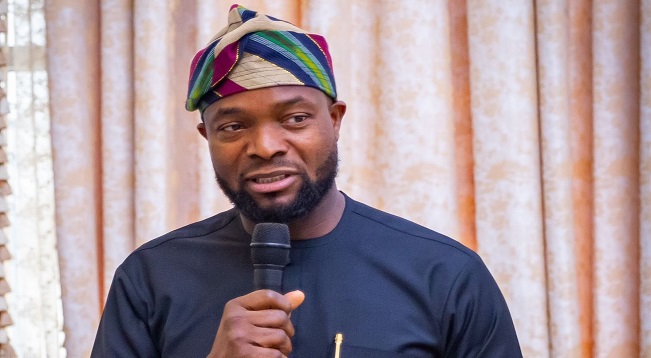
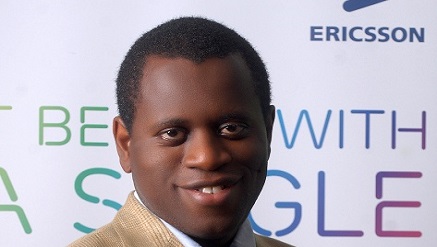
While addressing journalists in Lagos, recently, Kamar Abass, managing director (Nigeria), Ericsson, disclosed that, apart from mobile banking and oil and gas, agriculture and energy would create the biggest opportunities for the mobile operations in the country.
Abass said, for instance, need for e-Metering would open new vistas and couple of small businesses in the Africa’s most populous nation.
However, he added a caveat as country’s ability to harness the potentials is dependent on the conscious efforts to implement the national broadband plan, and other policies that will ensure return on investment.
The Ericsson’s Country Manager added that several other infrastructural developments must be secured and oiled effectively for boisterous market propositions.
Specifically, he said, that Long-Term Evolution (LTE) infrastructure are transformational in the Nigerian market and could be seen as the game changer and driving investments.
Ericsson, had in its June 2014 Sub-Saharan Africa Ericsson Mobility Report showed that in 2014 phone users accessed 76,000 TB (terabyte) of data per month, double the 2013 figure of 37,500 TB per month.
In 2015 the figures are expected to double again with mobile phone users accessing 147,000 TB per month.
The report also indicated that the rise of social media, content-rich apps and video content accessed from a new range of cheaper smartphones has prompted the rise.
Consumers in Nigeria, Kenya and South Africa are also increasingly using videoTV and media services from their smartphones.
Fredrik Jejdling, regional head of Ericsson Sub-Saharan Africa, said: “Sub-Saharan Africa is currently undergoing a mobile digital revolution with consumers, networks and even media companies are wakening up the possibilities of 3G and 4G technology. We have seen the trend emerging over a few years but in the past twelve months the digital traffic has increased over 100% forcing us to revise our existing predictions.”
In the next five years, the Report’s findings show that the voice call traffic in Sub-Saharan Africa will double and there will be an explosion in mobile data with growing 20 times between 2013 and 2019, twice the anticipated global expansion.
By 2019 the report predicts that 75 per cent of mobile subscriptions will be internet inclusive (3G or 4G).
This growth has been predicted following the launch in 2014 of a number of smartphones for under $50 by a number of major device manufacturers allowing the rapid expansion of 3G and 4G technology across the region.
The 2014 Report predicts that in just three years’ time 3G technology will become the dominant technology across the region.
Similarly, Abass, said specifically, the federal government and industry players should collaborate on improving fiber connectivity through a uniform system of charges on granting right of way (RoW); “And there is need for infrastructure sharing which will even help make available services to rural areas that are currently underserved”.
“Infrastructural developments like LTE, 3G are transformational tools in the Nigerian market that would help the industry ad more values to the nation that recently rebased its economy.
Ericsson regularly performs traffic measurements in over 100 live networks across the world and predictions have been made in collaboration with Ericsson ConsumerLab, utilising population, macroeconomic trends combined with the company’s own anonymised data.
Ericsson is the largest provider of managed services, building and improving the reach and efficacy of mobile networks, in Sub-Saharan Africa and globally.
Ericsson Reveals Key Sectors to Drive Nigeria’s Mobile Operations
Comms Week25 Jun 20140 Comments
Ericsson, a world leader in communications technology and services, has revealed the key sectors to drive Nigeria’s mobile operations, particularly, in the next five years. While addressing…
C
Published by
Comms Week
Trained and practicing journalist passionate about telecommunications, fintech, cybersecurity, and digital economy reporting.
You May Like

FG Calls for Increased Investment in Local Innovation Hubs across Nigeria

NITDA, Budget Office Inaugurate Technical Committee to Drive Nigeria’s Sovereign Cloud Initiative

Glo Calls on Nigerians to “Never Settle For Less”, Launches 4 New Products

Google Offers Nigerian Students Free Gemini AI Plus Subscription for One Year

NITDA, North West University Move to Deepen Digital Transformation