Telecom
Mobile Industry Eyes 5Bn ‘Dormant’ Phones Sitting in Desk Drawers for Recycling

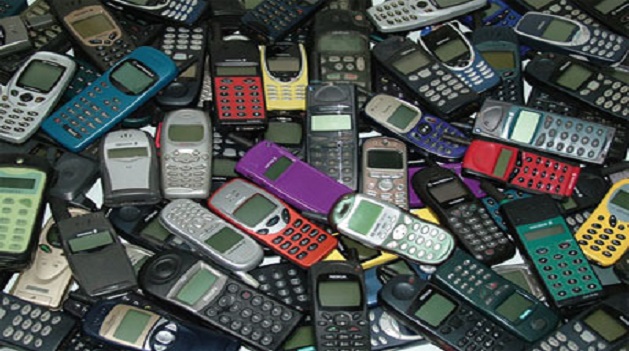
More than five billion mobile phones, currently sitting unused and unloved in desk drawers around the globe, are being targeted for reuse or recycling as the mobile industry aims to develop a more ‘circular’ supply chain for the smartphones most of us rely on every day.

In a boost to the industry’s circularity ambitions, 12 leading operators* around the world today signed up to a new set of pace-setting targets developed with the GSMA, which represents the mobile industry worldwide, in a project led by Tele2 and Orange. The new goals are designed to accelerate and build upon the work already being undertaken by the mobile industry as it takes steps to move away from the traditional ‘take-make-dispose’ approach to the materials used in mobile phones. Operators are committing to:
- Increase take-back of mobile phones
By 2030, the number of used mobile devices collected through operator take-back schemes amounts to at least 20% of the number of new mobile devices distributed directly to customers. - Boost recovery of mobiles and prevent devices going to landfill or incineration
By 2030, 100% of used mobile devices collected through operator take-back schemes will be repaired, reused or transferred to controlled recycling organisations.
Alongside existing commitments such as operators’ own targets, initiatives, and national take-back schemes, this new set of goals is intended to help reduce ‘e-waste’, extending the longevity of mobile devices by giving them a second life, as well as recycling materials to be used in new smartphones.
A refurbished phone can have 87% lower climate impact than a newly manufactured phone. The GSMA estimates that if properly recycled, five billion mobile phones could recover USD 8 billion worth of gold, palladium, silver, copper, rare earth elements, and other critical minerals, and enough cobalt for 10 million electric car batteries.
The figures released today highlight the pool of valuable resources available for reuse or responsible recycling. Using such materials effectively could potentially lower the cost of manufacturing mobile phones, and tackle affordability barriers that are preventing more people from getting online.
At the same time, operators recognise that further work is needed to address concerns that stop people from returning handsets, such as data privacy, the need to save precious memories stored on devices, and the desire to keep a spare device.
John Giusti, Chief Regulatory Officer for the GSMA, said: “Most mobile operators around the world are already taking concrete actions to rapidly cut their carbon emissions over the next decade.
“Moreover, mobile connectivity is playing a major role in helping all sectors of the economy reduce their climate impact, enabling smarter and more efficient manufacturing, transport, and building, to name a few.
“However, mobile operators are determined to go further. We believe in the need to move to a more circular economy to reduce the impact of mobile technology on the environment, and applaud the latest commitments from 12 leading operators to accelerate the transition to greater circularity.
“In addition to the environmental benefits, more efficient and responsible use of resources could lower costs and make devices more affordable for the unconnected.”
Philippe Lucas, EVP, Devices and Partnerships, Orange, said: “This initiative underlines the significant momentum under way in the operator community to boost decarbonisation and the circular economy and we are proud to be part of it.
“It is only by working collectively that we can succeed, hence why Orange is playing a pivotal role in driving device longevity in the smartphone ecosystem, working with hardware and OS providers alike. Initiatives like these underscore our unwavering commitment to a sustainable future and will support Orange’s mission to attain net-zero carbon emissions by 2040.”
Erik Wottrich, Head of Sustainability at Tele2 said: “The growing amount of e-waste, including mobile phones, that is generated each year is not only an environmental challenge for our industry, but also a huge loss of potential financial value.
“To promote a more circular flow of resources is a key priority for Tele2, and I am grateful that we can contribute to that priority by leading this GSMA project together with Orange.
“As the environmental and business benefits of implementing a circular business model are clear, I hope that many more operators around the world will join us in the ambition of zero waste and increased take-back rate by 2030.”
Telecom
Nigeria’s Internet Usage Hits 1.24m Terabytes – NCC

Nigerian Communications Commission (NCC) has said that Nigeria’s internet usage reached a record 1.24 million terabytes in November 2025.

According to the latest data from the NCC, the figure rose modestly from 1.235 million terabytes in October, reflecting steady growth in digital activity across the country.
Broadband penetration in Nigeria crossed the halfway mark in November 2025, reaching 50.58 per cent, up from 45.61 per cent in January, the telecoms regulator reported.
The figure, however, falls short of the 70 per cent coverage target outlined in the National Broadband Plan 2020–2025, which expires this month.
The country had roughly 109 million broadband subscriptions by November. Growth has been uneven, hindered by infrastructure and regulatory constraints, including frequent fibre-optic vandalism that triggers 30 to 43 network cuts daily, high right-of-way fees, and declining subscriber numbers earlier in the year.
Expansion of mobile networks, particularly 3G and 4G services, alongside limited 5G rollouts in urban centres, affordable smartphones, and competitive data plans, has driven uptake.
Investments in the National Communications Backbone and private-sector initiatives have also improved access, especially in underserved areas.
While Nigeria is gradually improving digital inclusion, achieving the original broadband plan remains challenging due to high infrastructure costs, coverage limitations, and deployment hurdles.
The NCC maintains that continued investment in mobile networks and broadband infrastructure will sustain gradual growth in the sector.
Commenting on the development, some Nigerian analysts attributed the surge to the broader mobile and broadband adoption and the growing appetite for streaming, online learning and other digital services.
According to the analysts, the figures suggest that internet connectivity is no longer a luxury but a necessity for both business and leisure, underscoring the slow but steady expansion of Nigeria’s digital economy.
Telecom
NCC Ranked Among Top 3 MDAs for Best Website Performance in 2025

Bureau of Public Service Reforms (BPSR) has named the Nigerian Communications Commission (NCC) among the top three Ministries, Departments and Agencies (MDAs) of the Federal Government with the Best Ranking in Website Performance for 2025.

L-R: Head Special Projects, Nigerian Export Promotion Council (NEPC), Salamatu Andu; Executive Commissioner, Technical Services, Nigerian Communication Commission (NCC), Engr. Abaraham Oshadame; Director General Bureau of Public Service Reforms (BPSR), Head Customer Support Service, Galaxy Backbone, Rosemary Ehize; Secretary to the ES. Nigerian Content Development and Monitoring Board, Tahir Aminu at the BPSR award ceremony for top four MDAs in BPSR Website Performance and Ranking 2025 at the BPSR office on Tuesday, 23rd December, 2025.
This is coming barely three weeks after the telecom regulator was recognized as one of the top five best-performing Federal Government agencies for 2025 by the Presidential Enabling Business Environment Council (PEBEC) – a testament to the Commission’s consistency in investment in technology for ensuring efficient service delivery.
In the BPSR 2024/2025 scorecard ranking of agencies’ websites, the NCC came second in the ranking, trailing behind Galaxy Backbone Limited, which came first while the Nigeria Export Promotion Council (NEPC) clinched the third position, from a pool of 235 MDAs, whose website were evaluated.
BPSR deployed 14 evaluation criteria in include MDA’s website compliance with .gov.ng domain name, appearance and aesthetics (look and feel) of the website, content, relevance to MDAs mandate/government policy and the website’ structure.
Others include website’s responsiveness (device compatibility), security, load time, usability/ease of navigation, availability/uptime, functionality, interactivity, accessibility and capacity building.
The recognition was announced at the official release of Federal Government 2024/2025 Scorecard Ranking for MDAs’ Website held at the Federal Ministry of Finance Auditorium in Abuja on Monday (December 22, 2025) while the award presentation took place at BPSR’s Office on Tuesday (December 23, 2025).
The award, which is an important index metric of the National e-Government Masterplan for determining the Nigeria e-Government Status, was received by the Commission in recognition of its commitment to maintaining a world-class website that enhances service delivery to the citizens.
Receiving the award on behalf of the Executive Vice Chairman of the NCC, Dr. Aminu Maida, the NCC’s Executive Commissioner, Technical Services, Abraham Oshadami, appreciated the BPSR for the recognition, describing the award as “another encouragement for the Commission to be a better public service institution leveraging digital platforms such as our web presence to enhance public service delivery to our various stakeholders, thereby implementing the Federal Government’s Ease of Doing Business policy direction.”
While presenting the award to the NCC, alongside other two agencies, BPSR’s Director-General, Mr. Dasuki Arabi, commended the top three for their proactive decisions in maintaining world-class websites, which are compliant with the Federal Government’s policy direction in effective and efficient service delivery to the citizens.
According to the DG, the 2024/2025 MDA’s websites’ ranking represents a collective effort of federal public institutions in Nigeria to be transparent, accountable and open in governance, as well as a confirmation to align with global best practices in service delivery to the citizens.
Developed about six years ago, Arabi said as a result of the annual ranking, more public institutions have indicated readiness to embrace reforms, and align with the policy direction of the current administration’s Renewed Hope agenda on improve governance for effective service delivery, as introduced by His Excellency President Bola Ahmed Tinubu.
“The ideals of harnessing and deploying technological tools for service delivery has become imperative following the COVID pandemic, and distortions of socio-economic system of nations, culminating in the evolution of competitiveness, cost effectiveness, and agile governance.
“As engine room of governance, it behoves on us in the public service to perform our statutory duties and we must put in place technological innovations and standardized websites to operate services as well as deliver service needs to citizens,” he said.
The Scorecard exercise, he said, is part of the BPSR reform broader function of conducting research on reform implementation efforts and presenting ‘best practice’ models to the entire Public Service, and to among others, improve access to government information, facilitate seamless financial transaction, eliminate corruption and cyber theft, as well as facilitate access to government services.
Speaking on the rigorous nature of the exercise that produced the top three winners, the DG said “in the past few weeks members of the Scorecard Jury drawn from inter-Ministerial Agencies, had worked tirelessly to mill websites of selected MDAs through a rigorous process of enduring criteria for the ranking and the outcome had also passed through a quality assurance mechanism to validate the outcome.”
Telecom
Oyedele Dismisses Claims Bank Accounts Without TIN Will Be Frozen

Taiwo Oyedele, Chairman of the Presidential Committee on Fiscal Policy and Tax Reforms, has dismissed reports that bank accounts not linked to a Tax Identification Number (TIN) will be frozen or automatically debited from January 1, 2026.

Taiwo Oyedele
Oyedele described the claims as false and misleading, warning Nigerians against panic over misinformation surrounding recent tax and financial reforms.
In a post on his X handle Tuesday morning, he wrote: “Don’t let anyone manipulate you. Your bank account is safe. Misinformation makes you panic and fear a reform that is designed to help you.
“When they tell you that your account will be frozen or automatically debited from January 2026, ask them for the evidence in the new law. Be wise.”
He stressed that no provision in the new tax laws authorises the freezing of bank accounts, adding that the rumours are part of widespread misrepresentation of the reforms.
The committee chairman reiterated that the reforms are intended to simplify Nigeria’s tax system and ease the burden on ordinary citizens, not to impose punitive measures on bank customers.
News3 days agoFIRS Declares NIN, CAC Numbers as Tax IDs from 2026
E-Financial3 days agoWorld Bank Reveals Obstacles to Growth of Mobile Money Accounts in Sub-Saharan Africa
Telecom3 days agoNCC Ranked Among Top 3 MDAs for Best Website Performance in 2025
Telecom2 days agoNigeria’s Internet Usage Hits 1.24m Terabytes – NCC
E-Financial13 hours agoBanks quietly move to enforce new ₦50 transfer levy from Jan. 1
General News13 hours agoEcobank Guarantees Seamless Digital Banking Services Throughout the Christmas and Year-End Period