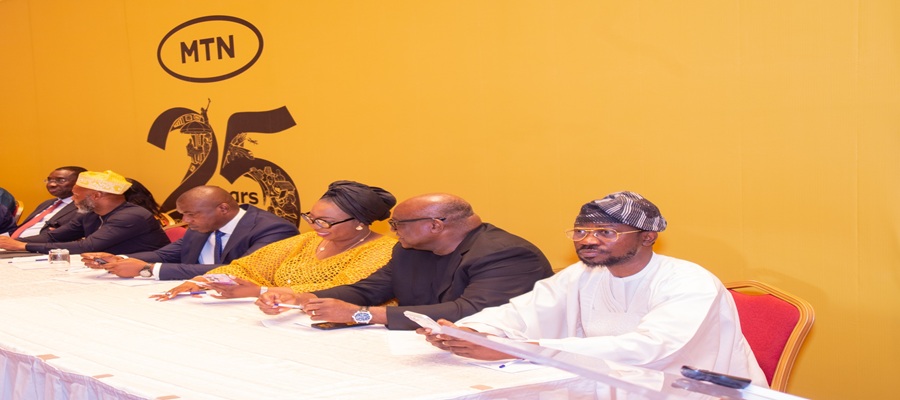
Dr Ernest Ndukwe, Chairman of MTN Nigeria and former Executive Vice Chairman of the Nigerian Communications Commission (NCC), has recalled the regulatory and infrastructure challenges that confronted Nigeria’s telecommunications industry before the GSM revolution of 2001.
Ndukwe, who spoke in a recent interview, identified spectrum availability as one of the major challenges faced by regulators in preparing the sector for the launch of GSM services.
He said spectrum was critical to the development of mobile networks, stressing that operators could not build functional wireless networks without access to the required frequencies.
“Without frequency, it is impossible to build a mobile or wireless network,” he said.
According to him, spectrum allocations at the time were unevenly distributed, with some operators holding 5MHz, 7.5MHz or 10MHz.
He said the NCC had to recover the scattered allocations and establish a transparent and equitable framework for the emerging telecommunications market.
“It was determined that for fair competition at the start of the new telecom market we were trying to birth, all operators needed to have the same size of spectrum through a transparent licensing process,” he said.
Ndukwe said the process was challenging, as some companies challenged the decisions in court, but the authorities eventually recovered sufficient spectrum in the 900MHz and 1800MHz bands for the new GSM services.
He identified inadequate telecommunications infrastructure as another major challenge confronting the country at the time.
According to him, Nigeria had only about 400,000 fixed telephone lines and 20,000 analogue mobile lines for a population of approximately 120 million.
“Nigeria was severely short of telecommunications infrastructure, which made it necessary to quickly commence a licensing process capable of attracting the right private companies to build out the network,” he said.
Ndukwe said the infrastructure provided by the Nigerian Telecommunications Ltd. (NITEL) was grossly inadequate to meet the country’s growing telecommunications needs.
He explained that the situation made private sector investment essential to rapidly expand access to telecommunications services.
The former NCC boss said the licensing process was therefore designed to attract companies with the financial and technical capacity to invest heavily in network infrastructure while operating under a credible regulatory framework.
He, however, said challenges associated with telecommunications infrastructure had continued beyond the initial GSM rollout.
Ndukwe identified inadequate power supply, insecurity and right-of-way issues as some of the major challenges confronting operators in maintaining and expanding their networks.
“The biggest challenge has been how to run the infrastructure on ground amid security, power, right of way challenges,” he said.
He added that the high cost of powering telecommunications infrastructure remained a significant burden for operators, while fibre cuts, road construction and security concerns also complicated network maintenance.
Ndukwe said the successful rollout of GSM services demonstrated what could be achieved when effective regulation was combined with private sector investment.
He recalled the first official GSM call in August 2001 as a significant milestone in Nigeria’s telecommunications history.
“We could immediately see the happiness of the Nigerian public as telecommunications services became easily and widely available.
“For me and the other members of the Commission at the time, it was a dream come true, and it showed that Nigeria could hold its head high among the comity of nations,” he said.
Ndukwe said 25 years after the GSM revolution, the continued growth of Nigeria’s telecommunications industry remained closely linked to the regulatory, investment and infrastructure foundations established during the sector’s formative years.
He said the transformation of the industry had demonstrated the importance of creating an enabling regulatory environment capable of attracting long-term private investment in critical infrastructure.
MTN Chairman, Ndukwe Recalls Regulatory, Infrastructure Challenges Before GSM Revolution
Ugo Onwuaso31 Aug 20260 Comments

Dr Ernest Ndukwe, Chairman of MTN Nigeria and former Executive Vice Chairman of the Nigerian Communications Commission (NCC), has recalled the regulatory and infrastructure challenges that confronted Nigeria’s telecommunications industry before the GSM revolution of 2001.
U
Published by
Ugo Onwuaso
Trained and practicing journalist passionate about telecommunications, fintech, cybersecurity, and digital economy reporting.
You May Like
The Headies Partners Wakanow Ahead of 18th Awards in Toronto
Ndukwe, Architect of Nigeria’s GSM Revolution, to Grace eWorld Forum as Special Guest

MTN Pays N7 trillion in Taxes to Federal Government
FG Taps French, Israeli Firms to Build New Satellites for Nigeria

NASENI Empowers 250 Ohafia Indigenes with Solar Solutions, Cookstoves