The second edition of GITEX Nigeria 2026 opened in Lagos on Wednesday, bringing together government policymakers, technology enterprises, investors and startups to accelerate West Africa’s participation in the global digital economy.
The two-day Tech Expo and Future Economy Conference, held on Sept. 2 and 3, followed the Government Leadership and AI Summit held in Abuja on Monday.
The event is organised by KAOUN International, global organiser of GITEX events, with the support of the Federal Ministry of Communications, Innovation and Digital Economy and the National Information Technology Development Agency (NITDA), and endorsed by the Lagos State Government.
The event is held under the patronage of President Bola Ahmed Tinubu.
Speaking at the inauguration, Lagos State Deputy Governor, Dr Kadri Obafemi Hamzat, said the choice of Lagos as the host city reflected the state’s growing influence in Africa’s technology and innovation ecosystem.
Hamzat said Lagos wanted to be recognised not only as Nigeria’s commercial capital but also as Africa’s innovation capital.
“GITEX NIGERIA is here because Lagos is consequential. What happens in this city sets the direction for a continent of around 1.4 billion people.
“That’s exactly why the conversation about Africa’s future economy belongs here in Lagos,” he said.
He said the ambition would require sustained investment in infrastructure, talent, policy and execution.
The Deputy Governor noted that Lagos had been ranked the world’s fastest-growing tech hub in the 2025 Dealroom Global Tech Ecosystem Index, recording an 11.6-fold increase in enterprise value to 15.3 billion dollars.
He added that the state was home to almost 1,000 active startups, representing about two-thirds of Nigeria’s startup ecosystem.
Also speaking, Secretary-General of the African Continental Free Trade Area (AfCFTA) Secretariat, H.E. Wamkele Mene, called for stronger digital integration across Africa.
Mene said the continent should develop and deploy digital infrastructure that reflected its own needs rather than rely solely on systems developed outside Africa.
“Africa should not simply import digital infrastructure systems developed for other countries outside of the continent.
“We possess the talent, innovation, and technical expertise required to shape our own digital transformation and ensure that it serves our integration and development objectives,” he said.
He called for the creation of a single digital continental market where African businesses could operate, transact and expand across borders.
The AfCFTA official said such integration would help transform digital innovation into commercially meaningful trade across the continent.
Director-General of NITDA, Kashifu Inuwa Abdullahi, said Nigeria needed to become an active builder of technology rather than merely a consumer.
Abdullahi said the country had real-world challenges that could be addressed through homegrown innovation if the right environment was created for young Nigerians.
He said the government was focusing on data sovereignty, cloud sovereignty, operational sovereignty and AI sovereignty.
“We don’t want to be at the receiving end of technology; we want to be an active builder of the technology,” he said.
The inauguration also featured discussions on digital identity, interoperability, data protection and cybersecurity, with attention drawn to the National Identity Management Commission (NIMC) Act 2026 signed by President Tinubu in June.
The new law replaced the 2007 legislation and provides a modern framework for secure and inclusive digital identity management, while reinforcing the National Identification Number (NIN) as Nigeria’s primary identity credential.
NIMC Director-General and Chief Executive Officer, Engr. Abisoye Coker-Odusote, said digital trust was critical to the success of digital transactions and cross-border trade.
“Connection without trust breeds vulnerability. When trust is embedded into the framework, onboarding becomes effortless, paperwork vanishes, and cross-border trade accelerates,” she said.
She said digital identity, public key infrastructure (PKI)-based trust and digital public infrastructure were essential components of an integrated digital ecosystem.
Meanwhile, Trixie LohMirmand, CEO of GITEX, said the event was designed to connect Nigerian and African innovators with global markets, investors, knowledge and international partnerships.
LohMirmand said Nigeria had the scale while Lagos had the ambition and energy needed to drive Africa’s technology ecosystem.
“We aim to grow collectively and put Africa at the top – not just as a consumer of AI, but as a globally competitive producer,” she said.
The GITEX Nigeria 2026 Tech Expo is featuring more than 400 exhibiting companies and startups showcasing technologies and solutions across sectors.
The organisers said thousands of visitors and more than 200 investors managing about 200 billion dollars in assets are participating in the event.
The expo is expected to provide opportunities for technology companies, startups, investors and policymakers to explore partnerships and investment opportunities while advancing conversations around AI, digital transformation and Africa’s digital economy.
GITEX Nigeria 2026 Opens in Lagos, Targets Africa’s Digital Transformation
Ugo Onwuaso3 Sept 20260 Comments
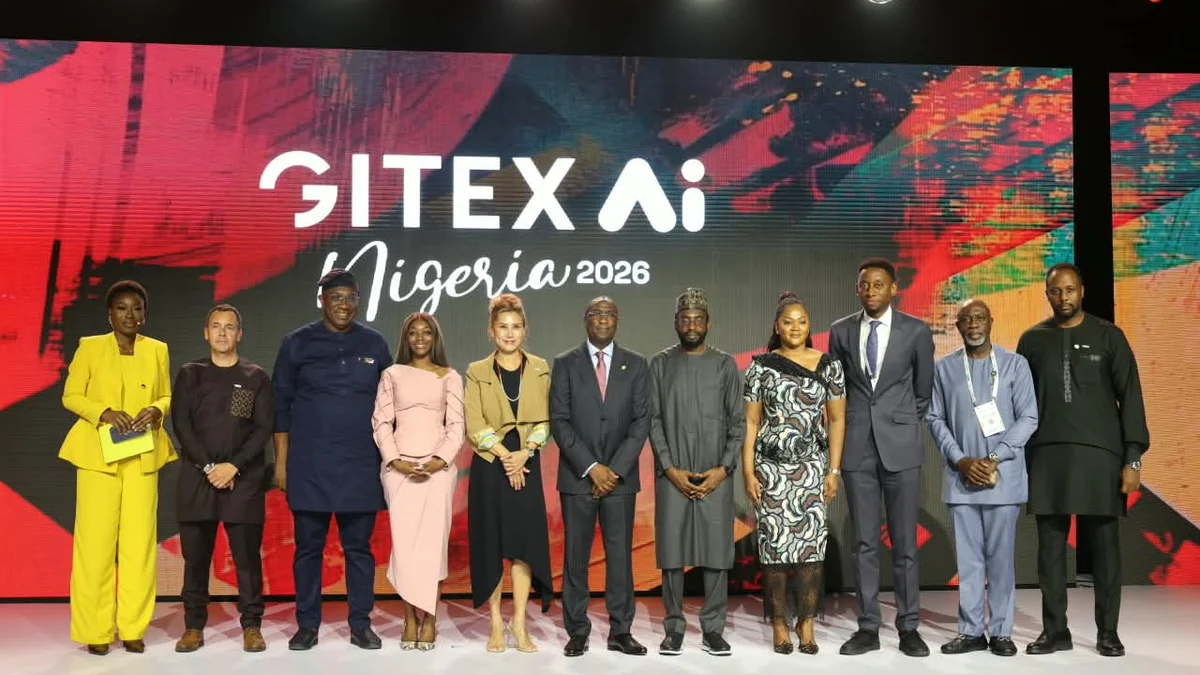
The second edition of GITEX Nigeria 2026 opened in Lagos on Wednesday, bringing together government policymakers, technology enterprises, investors and startups to accelerate West Africa’s participation in the global digital economy.
U
Published by
Ugo Onwuaso
Trained and practicing journalist passionate about telecommunications, fintech, cybersecurity, and digital economy reporting.
You May Like
Business Leaders Weigh In on Nigeria’s Economic Growth as FG Launches $1bn HOPE-SP Scheme
Zoho Enhances Catalyst Platform With Agentic AI Tools for Developers

Uber Shuts Down Nigeria Operations after 12 Years, Gives No Reason
inDrive Makes a Big Move for Nigerian Entrepreneurs With Free ₦50,000 Parcel Protection
Menxtt Tech NG Moves to Strengthen Cybersecurity and Digital Document Protection for Nigerian Businesses